Beijing Urges Continuation of U.S.-Iran Diplomatic Talks While Strengthening Strategic Ties with Riyadh

Summary
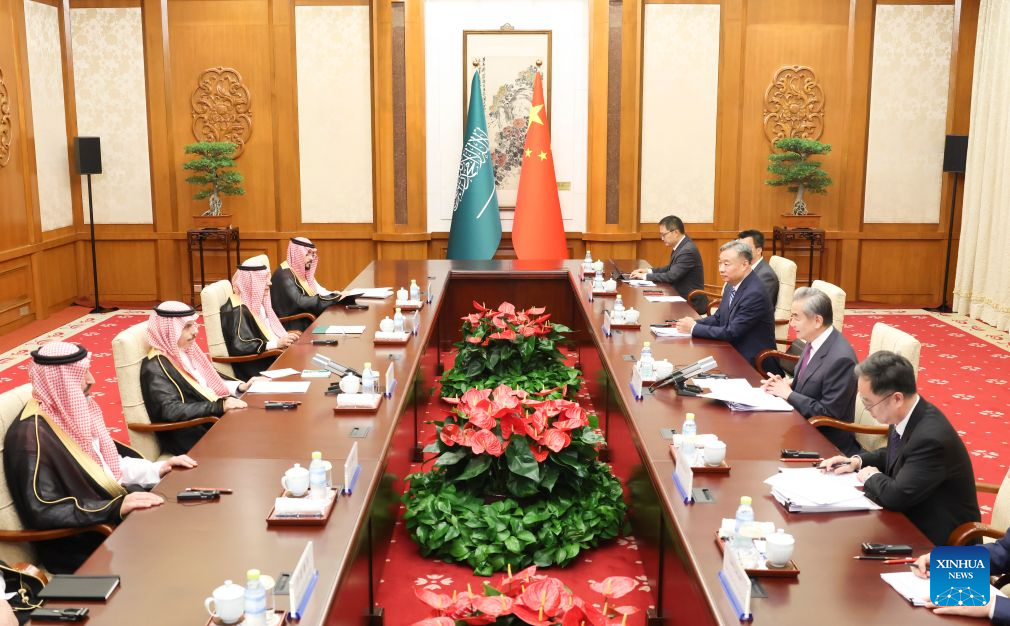
Chinese Foreign Minister Wang Yi met with Saudi Arabian Foreign Minister Prince Faisal bin Farhan Al Saud in Beijing on June 30, 2026, where he emphasized the critical importance of preserving the momentum of ongoing U.S.-Iran negotiations and implementing their existing memorandum of understanding. Wang acknowledged the fragility of the current ceasefire between the U.S. and Iran, while reinforcing China's position that diplomatic dialogue remains fundamentally superior to military confrontation, and expressed Beijing's willingness to work alongside Saudi Arabia to reduce regional tensions. China signaled its intention to support Saudi Arabia in assuming a more prominent role in international and regional affairs, while jointly upholding the authority of the United Nations and advancing a more equitable global governance framework. On bilateral matters, Wang reaffirmed the decade-old China-Saudi Arabia comprehensive strategic partnership as a model of South-South cooperation, highlighting mutual respect, equality, and win-win collaboration across trade, investment, energy, and emerging technologies such as artificial intelligence. The Saudi foreign minister reciprocated by reaffirming Riyadh's commitment to the one-China principle and expressing support for China's major global initiatives, signaling deepening multilateral coordination between the two strategic partners.
Key Takeaways
- 1. **Regional Security Mediation Role:** China is actively positioning itself as a key diplomatic stabilizer in Middle Eastern security dynamics, leveraging its relationships with both Saudi Arabia and Iran to sustain fragile U.S.-Iran ceasefire conditions and prevent renewed military escalation.
- 2. **Strategic Encirclement of U.S. Influence:** By encouraging Saudi Arabia to play a larger role in regional affairs while simultaneously supporting U.S.-Iran talks, China is strategically expanding its geopolitical footprint in a region traditionally dominated by American security architecture.
- 3. **China-Saudi Defence and Energy Nexus:** The deepening comprehensive strategic partnership, particularly in energy, investment, and AI, carries significant defence-industrial and dual-use technology implications, potentially reducing Saudi Arabia's security dependency on Western partners.
- 4. **Multilateral Governance Counter-Narrative:** China's call to jointly uphold UN authority and build a "more just and equitable global governance system" reflects Beijing's broader strategic objective of reshaping international institutional order to dilute Western-led norms and alliances.
- 5. **One-China Principle as Strategic Currency:** Saudi Arabia's reaffirmation of the one-China principle during a high-profile diplomatic meeting underscores Beijing's success in securing geopolitical endorsements from key Arab states, strengthening China's diplomatic deterrence posture against Taiwan-related challenges.