India Evaluates Rolls-Royce and Safran Proposals for AMCA Engine Development and Technological Independence

Summary
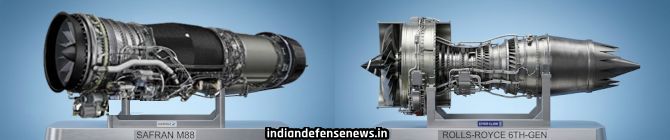
India is assessing competing proposals from British firm Rolls-Royce and French company Safran to co-develop a powerful 110–130kN class turbofan engine for its Advanced Medium Combat Aircraft (AMCA) program, in partnership with DRDO and the Gas Turbine Research Establishment. Safran is offering an enhanced derivative of its proven M88 engine, which already powers India's Rafale fleet, with full technology transfer and an existing MRO facility in Hyderabad, though analysts warn the M88 architecture may fall short of fifth and sixth-generation performance requirements. Rolls-Royce, in contrast, is proposing a clean-sheet sixth-generation Variable Cycle Engine with adaptive cycle technology, bench-tested under the Global Combat Air Program, offering superior scalability, combat performance, and fuel efficiency. Both companies have pledged 100% technology transfer and full intellectual property rights to India, making strategic autonomy a central factor in the decision-making process. India's Ministry of Defence is expected to finalize its recommendation by the end of 2025, a choice that will have profound long-term implications for Indian aerospace and defence capabilities.
Key Takeaways
- 1. **Strategic Autonomy is Central:** Both Rolls-Royce and Safran have offered full IP transfer and technology ownership, marking a significant shift in how foreign defence partners engage with India's sovereign defence ambitions.
- 2. **Rolls-Royce Offers Future-Proof Technology:** The sixth-generation Variable Cycle Engine design, with scalability up to 280kN thrust, positions India for next-generation combat, transport, and civil aviation applications beyond just the AMCA program.
- 3. **Safran Brings Proven Reliability but Limited Scalability:** While the M88 derivative benefits from existing Rafale integration and faster development timelines, its architecture may be insufficient to meet sustained supercruise and low infrared signature requirements critical for stealth operations.
- 4. **Industrial Ecosystem Building is a Key Differentiator:** Rolls-Royce's proposal to establish a domestic aero gas turbine complex could embed India into the global aerospace supply chain, creating long-term industrial and economic benefits beyond immediate military needs.
- 5. **The 2025 Decision Will Shape Decades of Indian Aerospace:** The Ministry of Defence's forthcoming choice is not merely a procurement decision but a generational strategic commitment that will determine India's position in advanced propulsion technology and defence manufacturing self-reliance.