What Pakistan's PRSC-EO3 and S1 Satellites Signal About Its Strategic Intentions in the Kashmir Region

Summary
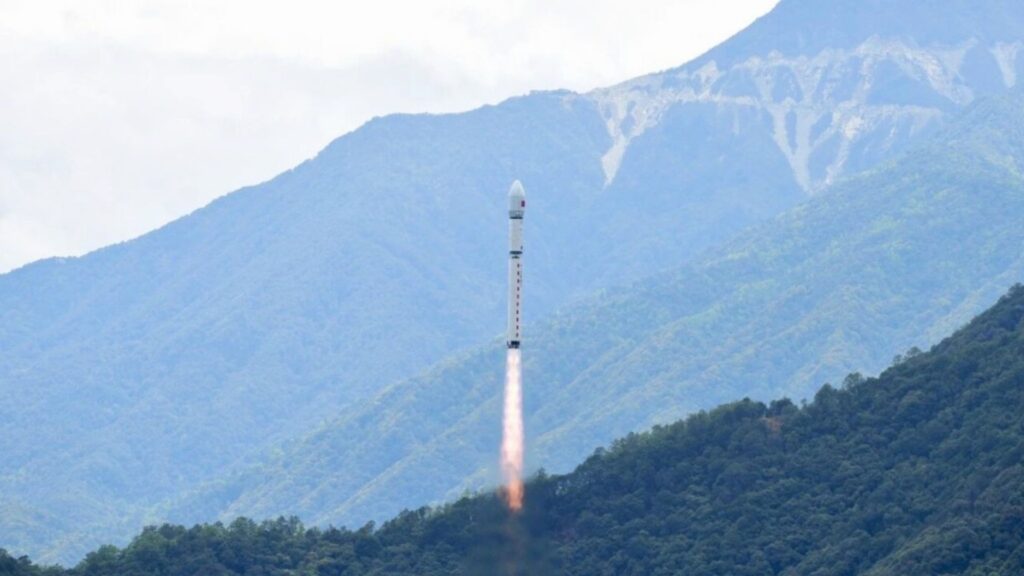
Pakistan launched the PRSC-EO3 earth observation satellite on 25 April 2026 aboard a Chinese Long March 6 rocket, completing a three-satellite electro-optical series under SUPARCO's Space Vision 2040 program, but the satellite's unusual 38-degree orbital inclination — rather than the conventional sun-synchronous orbit used by Pakistan's other satellites — has attracted significant analytical attention. Unlike Pakistan's other satellites which orbit at approximately 97-98 degrees, EO-3's lower inclination sacrifices global coverage in favor of dramatically increased revisit rates over the 20-to-40-degree-north latitude band, which encompasses Pakistan, northern India, and the contested Kashmir theatre. This orbital choice appears to directly address intelligence-gathering shortfalls exposed during the May 2025 India-Pakistan conflict, where delays in obtaining fresh battlefield imagery proved operationally costly. Beyond immediate tactical needs, the satellite also likely serves as a pathfinder for the larger 20-satellite constellation Pakistan contracted with China's PIESAT Information Technology company in September 2025, potentially testing the orbital mechanics, ground station operations, and tasking cycles that the future constellation will employ at scale. Adding further significance, EO-3 reportedly carries Pakistan's first onboard artificial intelligence processing unit, designed to accelerate the conversion of raw imagery into actionable intelligence — precisely the capability gap the 2025 conflict revealed.
Key Takeaways
- 1. Pakistan's deliberate selection of a low-inclination orbit for EO-3 signals a strategic prioritization of high-frequency surveillance over the Kashmir theatre, directly reflecting lessons learned from the May 2025 conflict with India
- 2. The satellite likely serves a dual purpose — addressing immediate ISR (Intelligence, Surveillance, and Reconnaissance) gaps while functioning as a technological pathfinder for Pakistan's planned 20-satellite PIESAT constellation
- 3. Pakistan's September 2025 agreement with China's PIESAT for a 20-satellite constellation, combined with an in-country manufacturing plant, represents a significant long-term expansion of Pakistan's indigenous and collaborative space-based military capabilities
- 4. The integration of onboard AI processing marks a qualitative leap in Pakistan's satellite technology, aiming to compress the sensor-to-decision timeline that proved problematic during active conflict operations
- 5. The EO-3 program reflects deepening Pakistan-China defense-space cooperation, raising strategic concerns for India about the growing sophistication and persistence of Pakistani surveillance capabilities along its northern and western military frontiers