Chinese Museum Exposes WWII Japanese War Crime of Injecting Animal Blood Into Human Prisoners

Summary
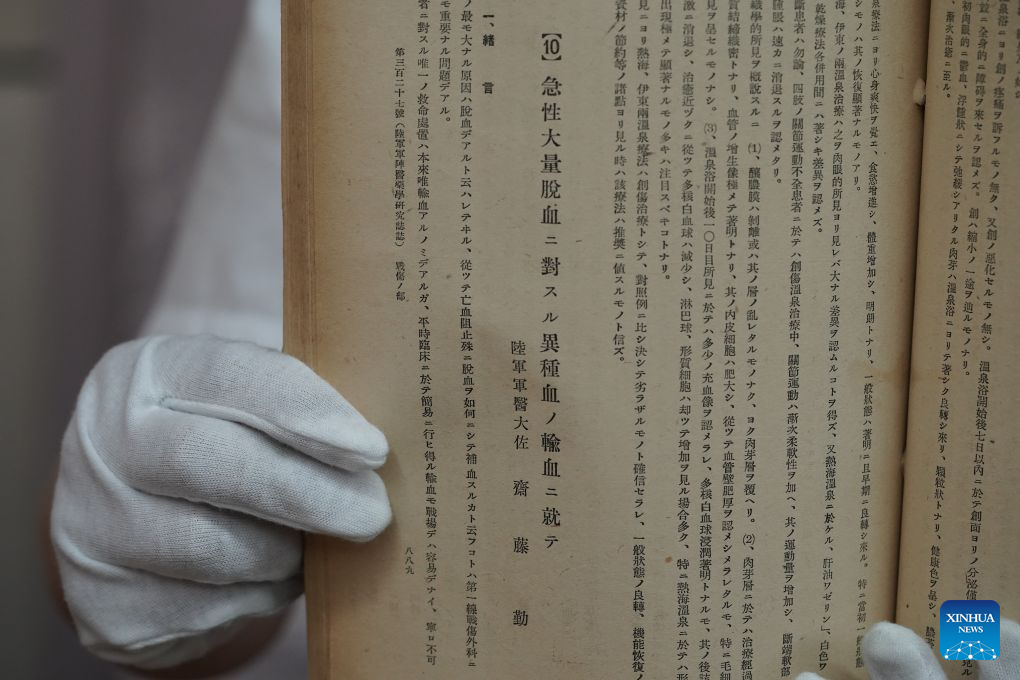
A Chinese museum dedicated to Unit 731 war crimes has released newly detailed evidence confirming that Imperial Japanese Army forces conducted horrific live experiments on 23 prisoners of war in 1938, involving the transfusion of blood from animals including horses, sheep, dogs, rabbits, and chickens into living human subjects. The experiments, documented by Japanese military surgeon Tsutomu Saito, were formally presented at a Japanese military medical conference in March 1940 and subsequently published in an official Japanese Army Medical Corps journal, indicating these atrocities were widely known within Japan's medical and military establishment. Victims subjected to massive blood drainage of 1,200 to 2,500 milliliters suffered extreme physiological distress, and those infused with animal blood experienced severe rejection reactions including bloody urine, high fever, chills, and cyanosis. Researchers also documented surgical procedures where victims' carotid arteries were physically clamped and animal serum was injected directly, with Japanese forces tracking the biological effects over multiple days. The same journal contained 187 articles by senior Unit 731 figures, including the notorious Shiro Ishii, covering bacteriological warfare and additional human experimentation programs.
Key Takeaways
- 1. The publication of human experiment findings in openly circulated military medical journals confirms these war crimes were institutionally sanctioned and widely acknowledged within Japan's wartime military-medical complex
- 2. Unit 731's research was explicitly battlefield-oriented, aimed at solving emergency blood supply challenges for combat operations, demonstrating the direct link between war crimes and Japanese military strategy
- 3. The systematic and documented nature of these experiments reflects a highly organized state-sponsored program of human experimentation, constituting grave violations of international humanitarian law
- 4. China's continued release of archived evidence serves as a deliberate strategic and diplomatic tool to maintain historical accountability pressure on Japan amid ongoing regional security tensions
- 5. The involvement of senior Unit 731 commanders like Shiro Ishii in published research underscores the command-level responsibility for these crimes, reinforcing arguments for broader historical and legal reckoning