Pakistan Develops Runway-Independent Drone Launch Technology Capable of Operating From Remote Locations

Summary
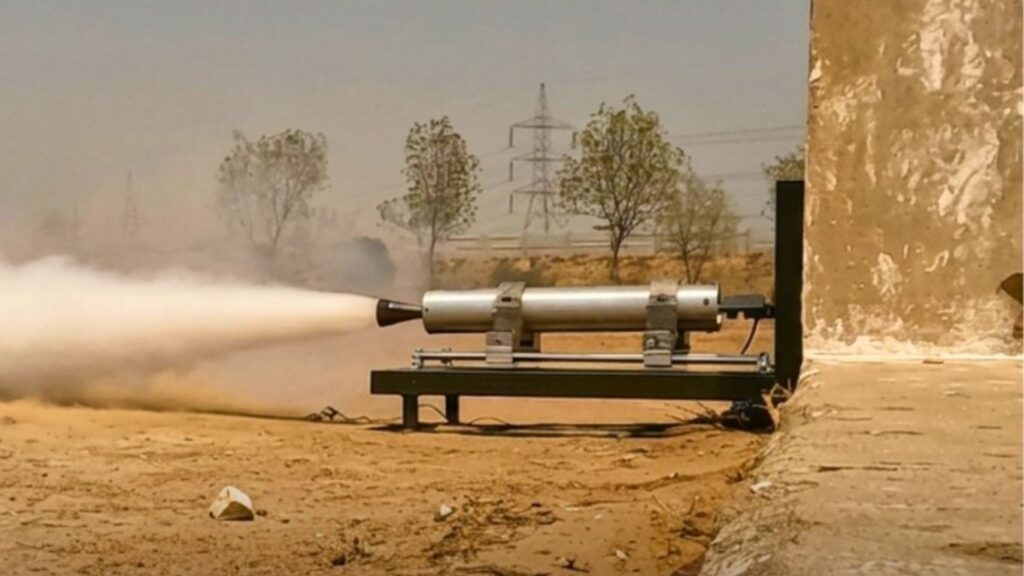
Pakistani private defence company Woot-Tech successfully tested a rocket-assisted take-off (RATO) booster system called the RATO-150 on June 6th, designed to launch unmanned aerial vehicles without requiring traditional airfields or large pneumatic catapults. The system is classified as a 2,500 Newton-seconds total impulse booster, which determines the maximum momentum transferable to an aerial vehicle during launch, making it suitable for a defined weight and size class of drones. Woot-Tech is positioning the RATO-150 primarily as a launch enabler for loitering munitions and one-way attack (OWA) drones, which already form the core of the company's existing product portfolio. The technology functions by using a short-burn solid or hybrid rocket motor to accelerate a UAV to flying speed from a rail, canister, or zero-length launcher, after which the booster separates and the drone's own engine takes control. This approach mirrors internationally established systems such as Israel's Harop and Iran's Shahed-136, suggesting Pakistan is advancing toward operationally comparable indigenous drone deployment capabilities.
Key Takeaways
- 1. Pakistan's private defence sector is developing indigenous launch infrastructure for loitering munitions, reducing dependence on conventional airfields and increasing tactical flexibility
- 2. The RATO-150 enables rapid drone deployment from austere or forward operating locations, significantly expanding potential launch sites in contested or remote environments
- 3. Woot-Tech's focus on loitering munitions and one-way attack drones signals Pakistan's strategic alignment with modern asymmetric warfare capabilities similar to those seen in recent global conflicts
- 4. The system's cost-effective and mass-producible design suggests Pakistan is pursuing scalable drone warfare solutions that could be fielded in large quantities
- 5. Pakistan's private defence industry is maturing, with companies like Woot-Tech independently developing complementary system ecosystems rather than isolated individual products