Could Pakistan's NASTP Be Working on a Mid-Life Upgrade for the PAF's Saab 2000 Erieye AEW&C Fleet?

Summary
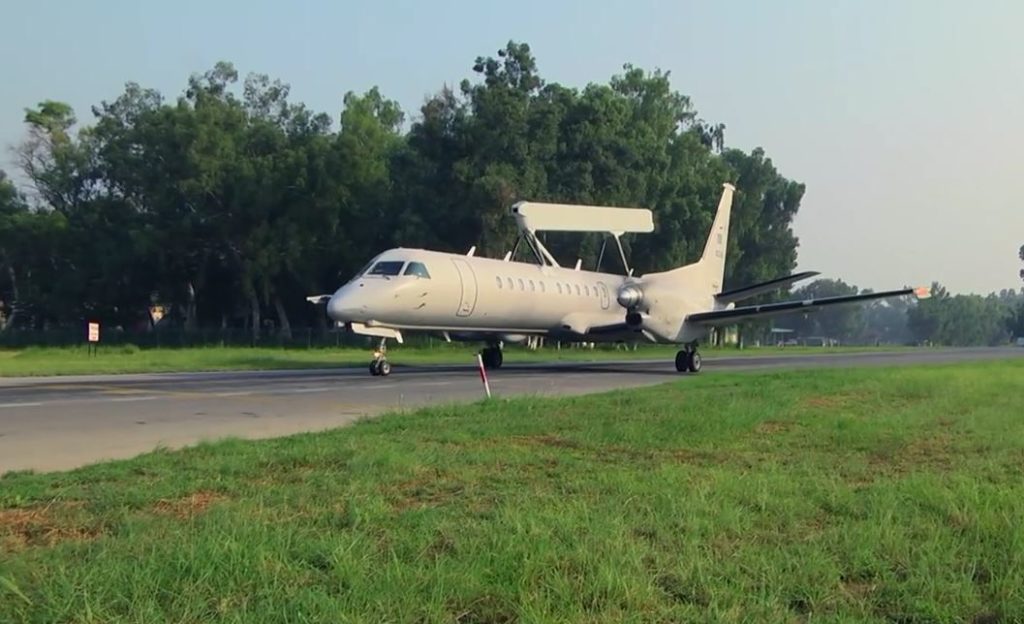
A recent Pakistan Air Force promotional video contained imagery attributed to the National Aerospace Science & Technology Park (NASTP) that suggests a potential structural upgrade is being planned for the PAF's Saab 2000 Erieye airborne early warning and control aircraft, with visible modifications indicated at multiple points on the airframe, particularly the front fuselage. While the image lacked sufficient detail to confirm specifics, analysts interpret it as evidence that NASTP is at least exploring a mid-life update (MLU) for the aging platform, which is approaching 20 years of operational service in the late 2020s and early 2030s. The Erieye's AESA radar, with a reported range of approximately 450 km, remains a viable asset for defensive operations, as demonstrated during the opening phase of the May 2025 conflict, but its capabilities are considered insufficient for modern offensive air operations. For offensive missions, the PAF requires an AEW&C system with enough range to monitor Indian airspace while remaining safely within Pakistani territory, out of reach of India's longer-range surface-to-air missile systems that would actively target such high-value aircraft near the border. The program therefore faces a critical cost-versus-capability balance between upgrading the existing radar or replacing it entirely.
Key Takeaways
- 1. **NASTP's Growing Role:** Pakistan's in-house R&D and production entity, NASTP, appears to be taking on increasingly ambitious upgrade programs, signaling a push toward greater domestic aerospace self-sufficiency.
- 2. **Aging AEW&C Capability Gap:** The PAF's Erieye fleet is approaching the end of its operational prime, creating a pressing need for modernization to maintain competitive airborne surveillance capabilities against regional adversaries.
- 3. **Defensive vs. Offensive Limitations:** While the Erieye's 450 km radar range proved operationally relevant in defensive scenarios during the May 2025 conflict, it is strategically inadequate for offensive operations that require deep surveillance into enemy territory from a safe standoff distance.
- 4. **SAM Threat Driving Standoff Requirements:** India's advanced long-range surface-to-air missile systems are forcing Pakistan to prioritize extended-range AEW&C solutions that can operate well within Pakistani airspace, raising the performance threshold for any future upgrade.
- 5. **Upgrade vs. Replacement Dilemma:** The PAF must weigh the financial and technical feasibility of upgrading the Erieye's existing radar system against the significantly higher cost of procuring an entirely new AEW&C platform, making the MLU decision strategically and economically consequential.