Xi Jinping Announces Key Agreements with Kim Jong Un on Advancing China-North Korea Relations into a New Phase

Summary
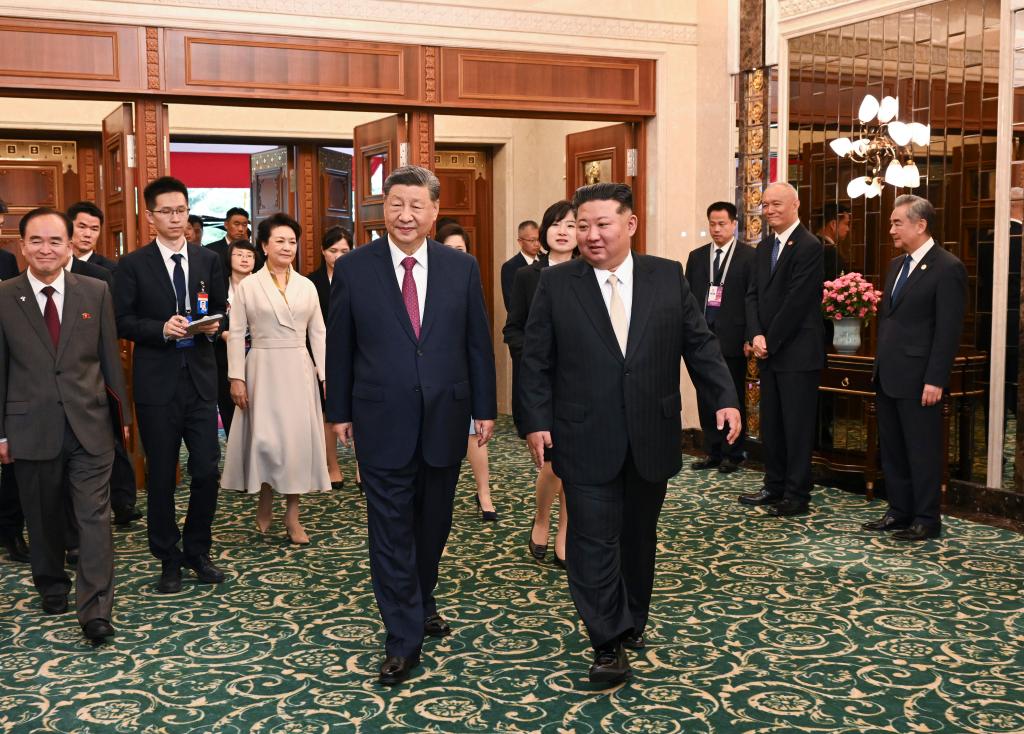
Chinese President Xi Jinping concluded a state visit to Pyongyang on June 9, 2026, announcing that he and North Korean leader Kim Jong Un had reached significant consensus on advancing bilateral relations in a new era. During a luncheon hosted by Kim and his wife, Xi emphasized that both sides engaged in substantive discussions on preserving regional and global peace and stability, signaling a deepening of strategic alignment between the two nations. Xi noted that the visit had strengthened mutual understanding between China and the DPRK, making the direction of future cooperation clearer and more defined, while expressing willingness to jointly lead bilateral relations to greater development. Kim, in turn, characterized Xi's visit as a complete success, stating it sent a positive signal to the world of strengthening friendly cooperation between the two countries, and pledged to implement the consensus reached during the visit to achieve new tangible outcomes. The visit concluded with a grand farewell ceremony at Pyongyang airport, underscoring the ceremonial and diplomatic weight both sides placed on the engagement.
Key Takeaways
- 1. **Strategic Realignment:** The visit signals a formal deepening of the China-DPRK strategic partnership, potentially reshaping regional security dynamics in Northeast Asia
- 2. **Regional Stability Discussions:** Both leaders explicitly discussed safeguarding regional and global peace, suggesting coordinated positioning against Western-led security frameworks and alliances such as US-ROK-Japan trilateral cooperation
- 3. **Socialist Solidarity as Strategic Cover:** Xi's reference to injecting "impetus into the socialist cause of both countries" indicates ideological framing is being used to solidify a mutual defence and political support structure
- 4. **Implementation Commitments:** North Korea's pledge to implement agreed consensus and pursue "tangible outcomes" suggests concrete military, economic, or diplomatic cooperation agreements may have been concluded behind the scenes
- 5. **Geopolitical Signalling:** Kim's acknowledgment that the visit "attracted widespread attention from various sides" reflects both nations' deliberate use of high-level diplomacy as a geopolitical messaging tool toward the US, South Korea, and their allies