China Successfully Deploys Experimental Communications Satellite Into Orbit

Summary
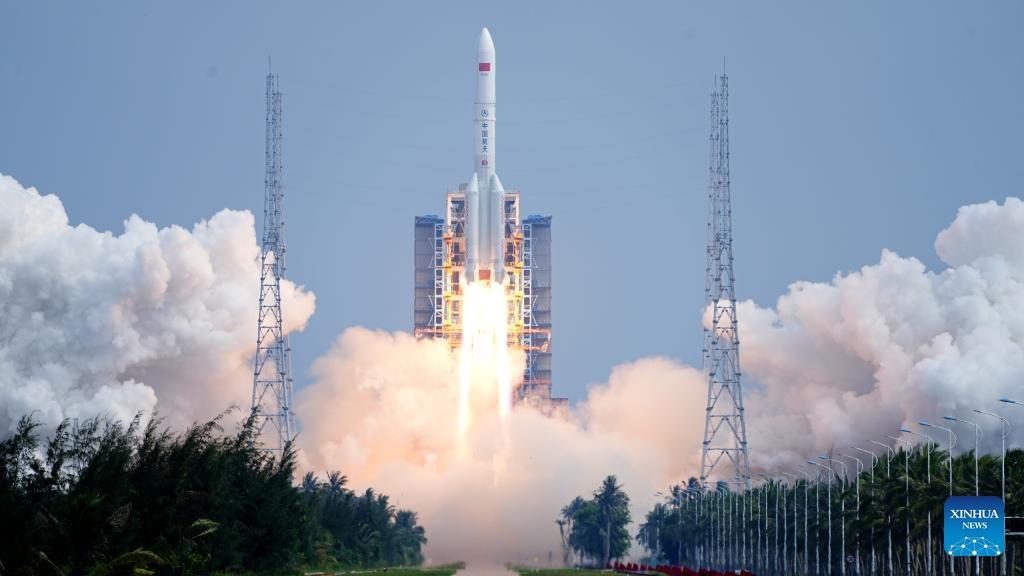
China successfully launched a new communication technology test satellite on June 11, 2026, from the Wenchang Space Launch Site located in Hainan Province, southern China. The satellite was lifted into orbit aboard a Long March-5 rocket at 3:30 p.m. Beijing Time, subsequently achieving its designated orbital position. The primary purpose of this satellite is to conduct validation testing of multi-band and high-speed communication technologies, suggesting an advancement in China's space-based communications capabilities. This mission holds additional historical significance as it represents the 650th overall mission completed by China's Long March carrier rocket series, underscoring the program's extensive operational history and reliability.
Key Takeaways
- 1. **Advanced Communications Testing:** The satellite's focus on multi-band and high-speed communication technology validation signals China's intent to develop more sophisticated and resilient military and civilian communication networks in space
- 2. **Strategic Space Infrastructure:** Multi-band communication capabilities are particularly significant for military applications, as they enhance redundancy and resistance to jamming or signal disruption in contested environments
- 3. **Long March-5 Capability:** The use of the heavy-lift Long March-5 rocket demonstrates China's growing capacity to deploy large and complex payloads into orbit, reinforcing its strategic space launch capabilities
- 4. **Program Milestone:** The 650th Long March mission highlights the maturity and scale of China's space launch program, reflecting decades of sustained investment in space technology
- 5. **Geopolitical Implications:** Continued Chinese advancements in space-based communications technology intensify competition with the United States and other space powers in the increasingly strategic domain of military space operations