Turkish Navy Commissions Fleet of 100 Disposable Unmanned Attack Vessels for Coordinated Maritime Warfare

Summary
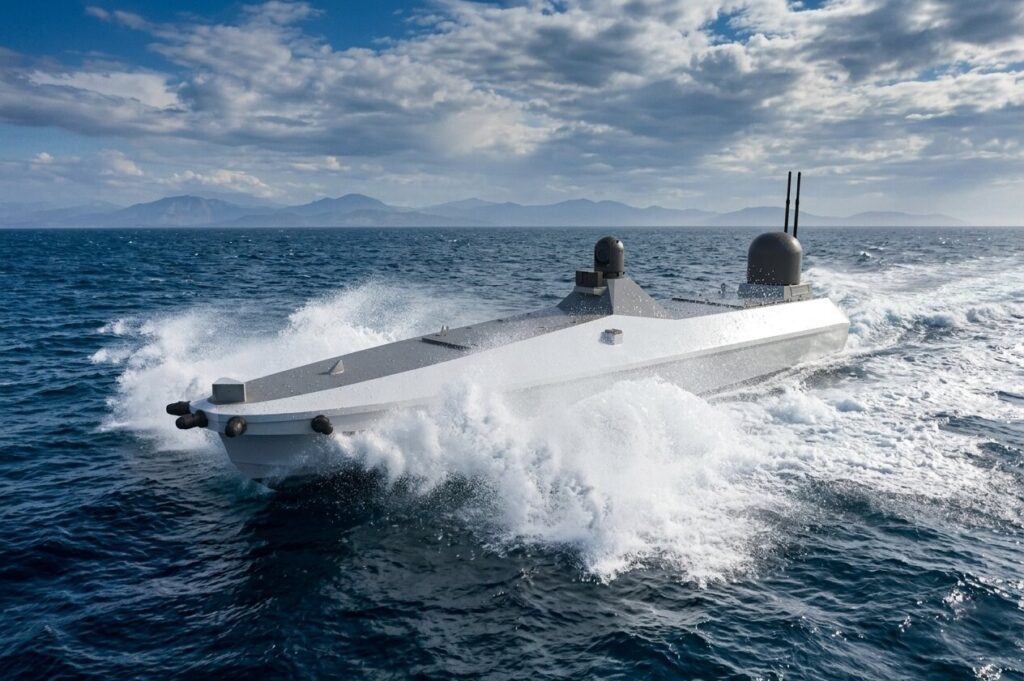
The Turkish Navy has officially approved the procurement of 100 expendable kamikaze unmanned surface vessels (USVs), distributed across three competing defense contractor teams — Aselsan/Ares Shipyard (40 units), STM/Yonca Shipyard (32 units), and Havelsan/Sefine Shipyard (32 units) — following a February 2026 decision by Turkey's highest defense procurement authority, the SSIK. This multi-vendor strategy is deliberately designed to build redundant, competitive parallel supply chains rather than rely on a single producer, with the total unit count potentially adjusted to align with an operational doctrine built around four-vessel tactical swarm units. The key platforms revealed so far include Aselsan's Tufan, an 8-metre vessel carrying a payload equivalent to a Mk 82 bomb (approximately 227 kg of explosives), and STM's smaller Yaktu, optimized for asymmetric maritime operations including port defense and open-sea strikes. Both vessels incorporate low-profile hull designs to minimize radar and visual detection, and are equipped with line-of-sight and satellite communications enabling network-centric, cooperative swarm operations with real-time data sharing and autonomous task allocation. This procurement represents a significant expansion of Turkey's broader push into expendable autonomous naval systems, building on existing capabilities such as the Albatros-S swarm USV, KARGU aerial swarm, and the previously commissioned Marlin SİDA armed USV.
Key Takeaways
- 1. **Strategic Swarm Doctrine:** Turkey is formally institutionalizing naval swarm warfare as a core tactical concept, with four-vessel cooperative units forming the basic operational building block — signaling a doctrinal shift toward distributed, expendable autonomous strikes
- 2. **Industrial Resilience by Design:** The deliberate split of contracts across three vendor teams ensures supply chain redundancy and sustained competition, reducing vulnerability to single-point production failures during wartime or crisis scenarios
- 3. **Asymmetric Threat Multiplication:** With kamikaze payloads equivalent to a Mk 82 bomb, even mid-tier adversaries or non-state actors could leverage these low-cost vessels to pose credible threats to high-value naval assets, fundamentally altering maritime threat calculus
- 4. **Cross-Domain Autonomous Integration:** The shared swarm logic between naval USVs and KARGU aerial drones suggests Turkey is developing an integrated, cross-domain autonomous warfare ecosystem capable of simultaneous air and sea coordinated attacks
- 5. **Export and Geopolitical Implications:** Turkey's rapid maturation of affordable autonomous naval systems positions it as a competitive arms supplier in regions traditionally dominated by Western, Russian, and Chinese defense industries, with significant implications for regional naval balances