Is the Pakistan Air Force Considering Acquiring the Bayraktar Kızılelma Stealth Combat Drone?

Summary
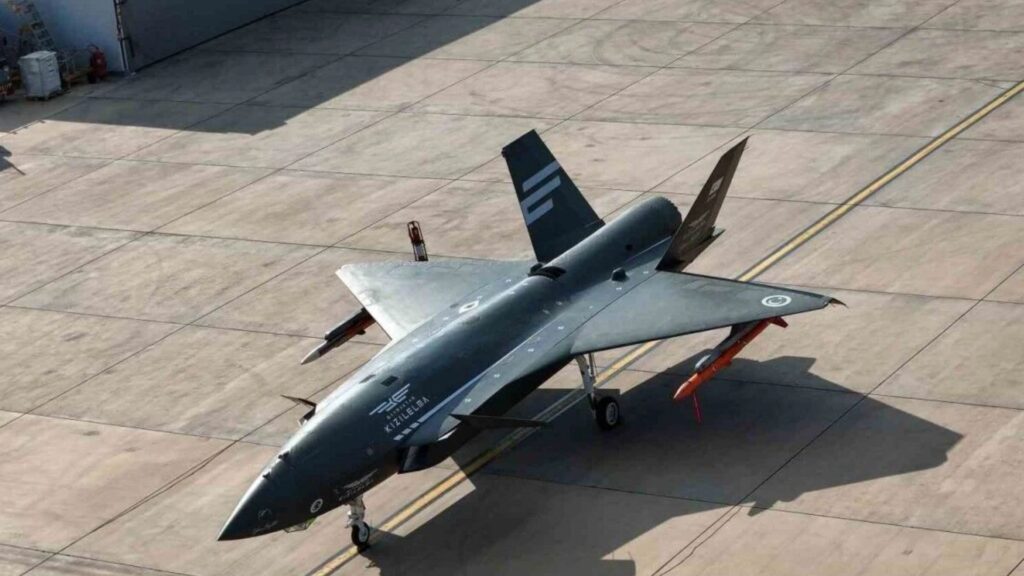
Pakistan Air Force Chief Air Chief Marshal Zaheer Ahmed Baber Sidhu was photographed alongside the Bayraktar Kızılelma jet-powered stealth UCAV at Baykar Technologies' facilities in Turkey in May 2026, signaling a potentially landmark procurement decision for the PAF. The visit reflects a broader strategic intent that extends beyond simply acquiring a new airframe, as the PAF appears to be constructing an independent combat architecture featuring sovereign sensors, indigenous data links, and domestically integrated weapons systems. Baykar Technologies has already established deep institutional roots in Pakistan, including a dedicated subsidiary, a cooperation agreement with NASTP, an active production facility under construction, and prior collaborative work that yielded the KaGeM V3 miniature cruise missile. The PAF had previously signaled interest in jet-powered stealth UCAVs roughly 18 months ago, and the preference increasingly points toward a loyal wingman concept that prioritizes Pakistani sovereign control over turnkey foreign solutions. While competitors such as Turkish TAI with the Anka-3 and China's AVIC with loyal wingman drone ecosystems offer complete integrated packages, both come with the critical drawback of manufacturer-controlled internal architectures that would limit Pakistan's ability to integrate indigenous systems.
Key Takeaways
- 1. **Strategic Sovereignty Priority:** The PAF is not simply seeking an off-the-shelf drone purchase but is deliberately pursuing an autonomous unmanned combat architecture that integrates indigenous Pakistani sensors, weapons, and data links, reducing dependence on foreign OEMs.
- 2. **Deep Baykar-Pakistan Industrial Integration:** Baykar Technologies has moved well beyond a vendor relationship with Pakistan, establishing a local subsidiary, partnering with NASTP, constructing a production facility, and conducting active engineering recruitment, indicating a long-term co-development posture.
- 3. **Loyal Wingman Concept as Strategic Direction:** The PAF's procurement interest is gravitating toward a loyal wingman UCAV model that can operate alongside manned fighters, representing a generational shift in Pakistan's air combat doctrine and force structure planning.
- 4. **Competitive Alternatives Carry Sovereignty Risks:** Options from Turkish TAI (Anka-3/Kaan ecosystem) and China's AVIC (J-35/loyal wingman package) offer more complete integrated systems but surrender architectural control to foreign manufacturers, which the PAF appears unwilling to accept.
- 5. **Regional Security Implications:** Pakistan acquiring and domestically integrating a jet-powered stealth UCAV capability would significantly alter the South Asian military balance, particularly in the context of ongoing tensions with India, which is itself pursuing advanced unmanned and fifth-generation combat systems.