Pakistan's Drive to Establish an Underwater Nuclear Strike Capability

Summary
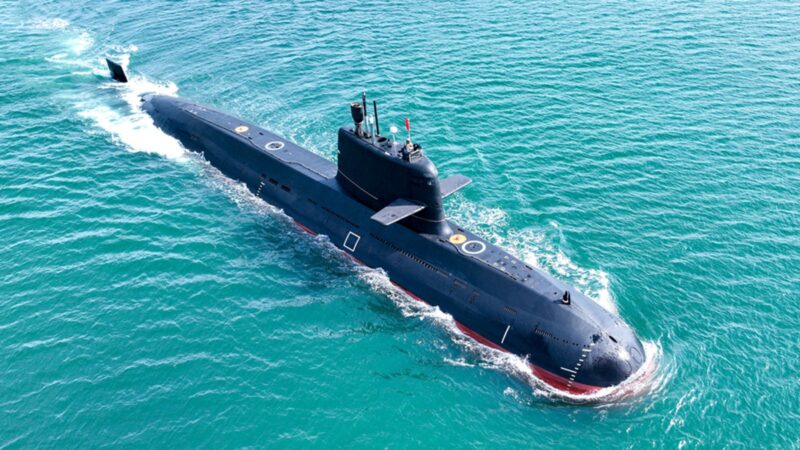
According to a May 2026 Drop Site News investigation, Pakistan reportedly sought China's help in developing a nuclear second-strike capability during negotiations over a potential Chinese military base at Gwadar, though Beijing declined due to non-proliferation commitments and associated strategic risks. While neither government has officially confirmed this claim, it is broadly consistent with a decade's worth of open-source evidence, including Pakistan's 2017 test of the Babur-3 submarine-launched cruise missile and public statements by retired Pakistan Navy officials in 2024. Pakistan had technically established a rudimentary sea-based nuclear capability through the Babur-3 SLCM, which represented a "hybrid solution" involving conventional submarine platforms carrying nuclear warheads. However, there are indications that Pakistan's Navy has since moved away from this hybrid model, instead choosing to clearly separate nuclear deterrence missions from conventional naval operations. Under this revised strategic framework, any dedicated sea-based nuclear strike capability would be reserved for nuclear-powered submarines, while conventionally powered platforms like the new Hangor-class submarines would focus exclusively on anti-ship and anti-submarine warfare roles.
Key Takeaways
- 1. Pakistan is actively pursuing a credible sea-based nuclear second-strike capability, reflecting its desire to strengthen deterrence against India's growing nuclear arsenal
- 2. China's refusal to assist Pakistan in acquiring nuclear-capable submarine technology underscores Beijing's prioritization of non-proliferation commitments over deepening its strategic partnership with Islamabad
- 3. The reported shift away from the "hybrid model" signals a maturing and more sophisticated Pakistani nuclear doctrine that seeks clear operational separation between nuclear and conventional naval assets
- 4. The Hangor-class submarines being designated exclusively for conventional warfare roles suggests Pakistan is deliberately compartmentalizing its naval programs to reduce escalation risks and improve strategic clarity
- 5. Pakistan's pursuit of a nuclear-powered submarine platform remains a critical and unresolved capability gap, as without such a vessel, its sea-based nuclear deterrent cannot be considered fully credible or survivable