Pakistan Air Force Chief Travels to Ankara as Defence Partnership Still Lacks Formal Agreement

Summary
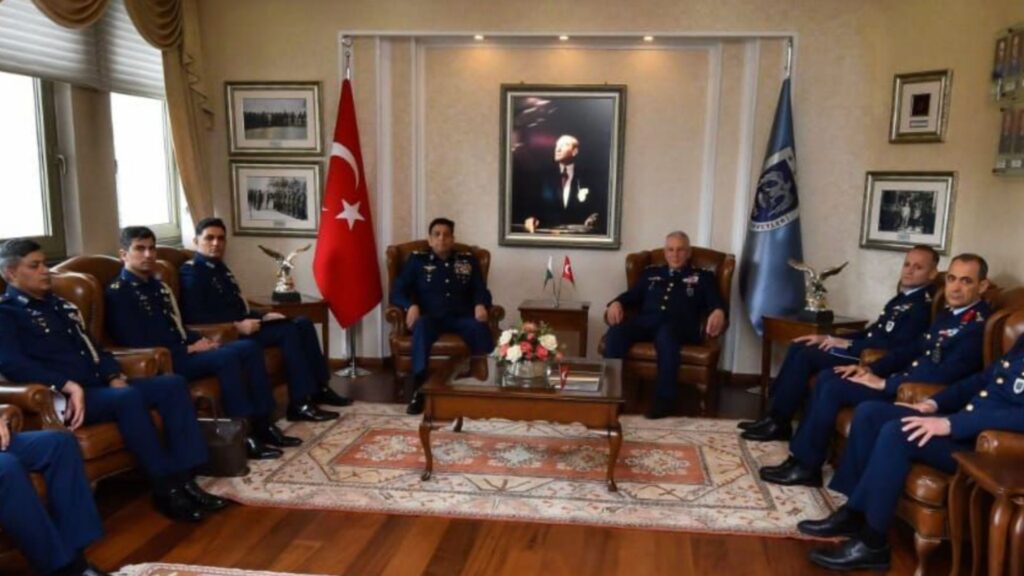
Pakistan Air Force Chief Air Chief Marshal Zaheer Ahmed Baber Sidhu conducted an official visit to Turkey in May 2026, holding high-level meetings with Turkish Defence Minister Yasar Güler and Turkish Air Force Commander General Ziya Cemal Kadioglu in Ankara, where discussions encompassed bilateral defence cooperation, regional security, and the potential KAAN fighter jet delivery timeline. The visit is part of a long-standing pattern of engagement between the two nations dating back over a decade, with Turkey consistently demonstrating greater eagerness to formalize deep defence-industrial ties than Pakistan has reciprocated in concrete commitments. The bilateral defence relationship has produced mixed results, with the MILGEM corvette program succeeding in delivering all four vessels — including two built domestically at Karachi Shipyard — while the $1.5 billion T-129 ATAK helicopter deal collapsed entirely due to U.S. export licence restrictions on the helicopter's American-made engine stemming from Turkey's S-400 purchase. Regarding the KAAN fifth-generation fighter program, Turkey has made increasingly explicit overtures for Pakistani co-development participation, including President Erdogan personally urging Pakistani involvement in software and design integration in September 2024, and Defence Minister Güler indicating a formal participation agreement was near finalization in January 2025. Despite years of high-level statements, engineer exchanges, and joint working group meetings, no formal contract for Pakistan's procurement or co-production of KAAN had been signed as of May 2026.
Key Takeaways
- 1. **Asymmetric Commitment Remains the Core Issue:** Turkey has consistently and publicly pursued deeper defence-industrial integration with Pakistan, while Islamabad has repeatedly stopped short of formalizing agreements, suggesting strategic hesitancy or competing procurement priorities on Pakistan's side.
- 2. **MILGEM Success Demonstrates Viable Co-Production Model:** The delivery of all four MILGEM corvettes, including two built domestically at Karachi Shipyard, proves that Pakistan-Turkey technology transfer arrangements can succeed and provides a credible template for future collaboration.
- 3. **T-129 Failure Highlights Third-Party Dependency Risks:** The collapse of the attack helicopter deal due to U.S. export licence denial underscores how Western-component dependencies in Turkish defence systems can directly jeopardize Pakistan's procurement plans and create strategic vulnerabilities.
- 4. **KAAN Program Trajectory Mirrors T-129 Delays:** The prolonged gap between high-profile political announcements and actual contractual commitment on KAAN raises legitimate concerns about whether Pakistan will ultimately formalize participation or once again disengage, potentially forcing Islamabad toward Chinese alternatives as occurred with attack helicopters.
- 5. **Regional and Multilateral Context Adds Strategic Significance:** Pakistan's participation in the EFES-2026 live-fire exercise alongside Turkey and other partner nations signals growing military interoperability, but meaningful strategic depth in the relationship remains contingent on converting diplomatic engagement into binding defence-industrial agreements.