Pakistan Army Aviation Corps' Stagnating Helicopter Fleet and Unfulfilled Acquisition Requirements

Summary
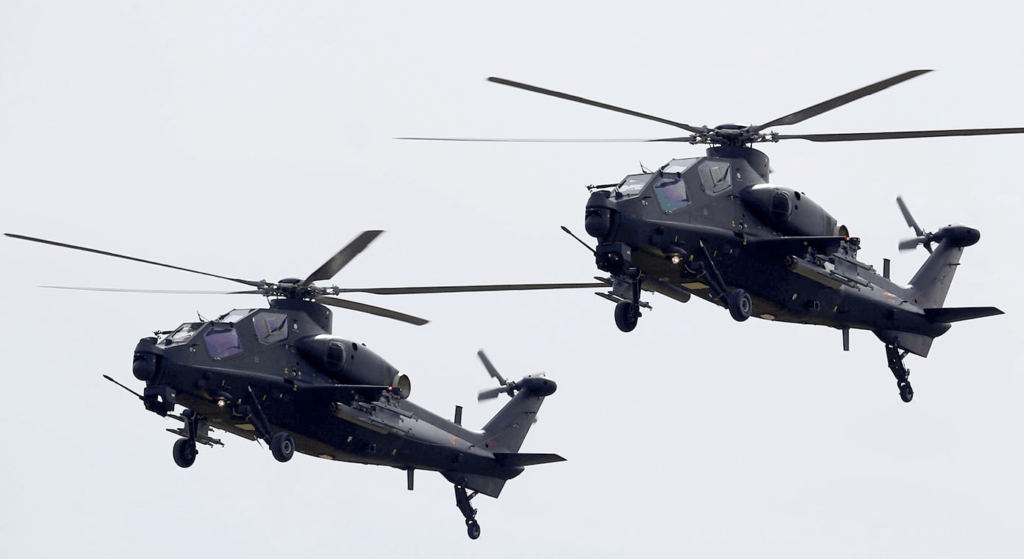
The Pakistan Army is actively modernizing its ground forces with new tanks, artillery, and armored vehicles, and following the May 2025 conflict with India has accelerated procurement of loitering munitions and stand-off weapons, yet the Pakistan Army Aviation Corps (PAA) has been largely neglected in terms of fleet renewal. The high-profile $1.5 billion deal for 30 Turkish T129 ATAK attack helicopters ultimately collapsed due to U.S. refusal to grant export permits for the American-made LHTEC CTS800 engines, despite favorable financing arrangements backed by Ankara and attractive offset provisions offered by Turkish Aerospace. The PAA's subsequent pivot to the Chinese Z-10ME attack helicopter has yielded minimal results, with only a single unit inducted to date, while a potential AH-1Z purchase from the United States remained dependent on American military financing mechanisms that were never secured. Beyond attack helicopters, the transport and utility helicopter segment has seen virtually no new procurement since the mid-2010s, leaving the PAA reliant on aging platforms including the Puma, Mi-17/171, and Bell-412EP, many of which have surpassed or are approaching 20 years of operational service. The author concludes that Pakistan's Army General Headquarters (GHQ) has consistently deprioritized aviation requirements, repeatedly deferring or shelving PAA modernization requests despite the corps' critical operational role.
Key Takeaways
- 1. The PAA's fleet modernization has been systematically deprioritized by GHQ, with procurement decisions repeatedly delayed or shelved despite clear operational requirements
- 2. U.S. export control mechanisms proved to be a critical vulnerability in Pakistan's attempt to acquire the Turkish T129 ATAK, highlighting the strategic risk of relying on platforms with American-origin components
- 3. Pakistan's transition toward Chinese defense hardware, exemplified by the Z-10ME acquisition, remains superficial in the aviation domain, with negligible actual induction numbers undermining operational readiness
- 4. The PAA's transport and utility helicopter fleet faces a serious aging crisis, with cornerstone platforms like the Puma reaching 40-50 years of service, posing significant risks to operational lift capability and force projection
- 5. Pakistan's broader defense modernization priorities appear skewed toward ground forces and drone/stand-off weapon capabilities following the May 2025 India conflict, potentially leaving army aviation as a persistent capability gap in future high-intensity operations