Enduring Bonds Between Chinese and British Families Commemorate a Courageous WWII Maritime Rescue

Summary
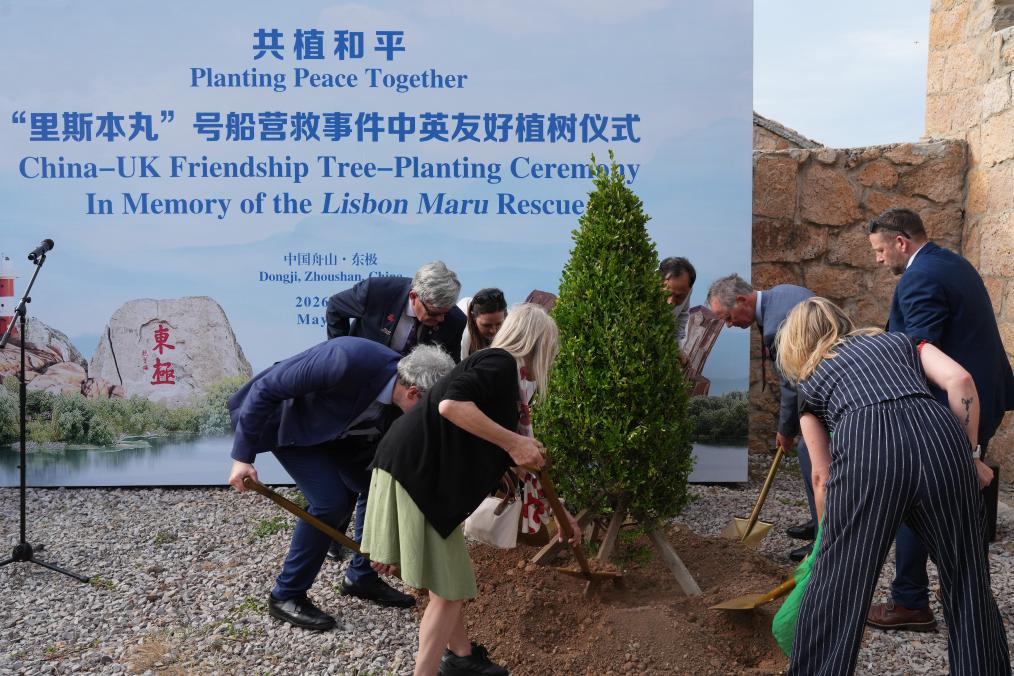
Descendants of British prisoners of war aboard the Lisbon Maru gathered in Zhoushan, Zhejiang Province, China, to commemorate a remarkable wartime rescue that occurred in October 1942. The Lisbon Maru, a Japanese-requisitioned cargo vessel transporting over 1,800 British POWs from Hong Kong to Japan, was torpedoed by a U.S. submarine after failing to display required POW transport markings, causing the ship to sink off the Zhoushan Islands. Despite Japanese soldiers firing into the water to prevent escape, local Chinese fishermen made 65 trips in 46 small wooden sampans, successfully rescuing 384 British POWs at great personal risk to themselves. Over eight decades later, the emotional ceremony brought together British descendants and Chinese families of the fishermen involved, exchanging symbolic gifts and sharing deeply personal stories that highlighted the enduring humanitarian bond between the two nations. The event underscored how a singular act of civilian courage during one of history's darkest conflicts continues to resonate as a powerful symbol of cross-cultural friendship and shared humanity.
Key Takeaways
- 1. **Civilian Humanitarian Action in Wartime:** Chinese fishermen defied active Japanese military suppression to rescue 384 British POWs, demonstrating extraordinary civilian courage in a combat environment
- 2. **Historical War Crimes Context:** Japan's failure to mark the Lisbon Maru with required POW transport markings, as mandated under international conventions, directly contributed to the U.S. submarine torpedo strike and the subsequent mass loss of life
- 3. **China-UK People-to-People Diplomatic Value:** The commemoration serves as a soft power opportunity, reinforcing grassroots historical ties between China and the UK that transcend current geopolitical tensions
- 4. **Military Ethics and POW Treatment:** The incident highlights critical wartime obligations regarding the protection and proper identification of vessels transporting prisoners of war under international humanitarian law
- 5. **Historical Memory as Strategic Narrative:** China's continued commemoration and promotion of this rescue story represents a deliberate effort to frame its wartime legacy in terms of humanitarian virtue and Allied cooperation, strengthening its historical positioning on the global stage