Beyond Visual Scanning: U.S. Troops Develop Sight and Sound Skills to Counter Drone Swarms

Summary
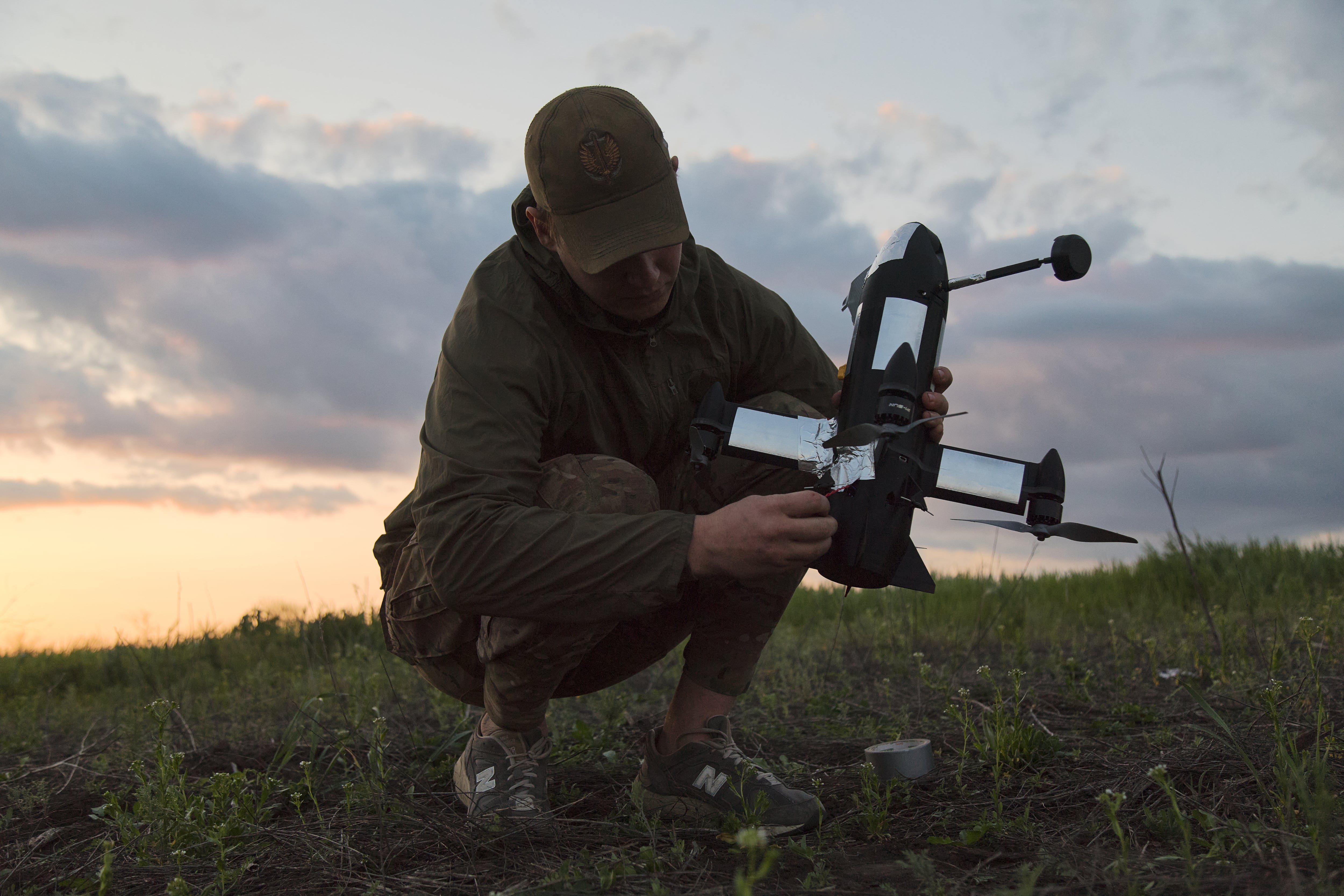
The U.S. Army conducted Project Flytrap, a multinational exercise held in Lithuania involving nearly 1,000 personnel, designed to test cutting-edge drone technologies and tactics in realistic combat conditions, including the use of drone swarms, jamming systems, and counter-UAS defenses. Soldiers practiced deploying masses of unmanned platforms to pin down enemy forces while simultaneously developing defensive countermeasures, with frontline troops learning to identify drones not just visually but also by their distinct sounds. For the first time, the exercise applied testing standards from JIATF 401, a Pentagon task force established in 2025 to consolidate drone acquisition and standards, with data collected on over 20 different systems including prototype platforms not yet issued to troops. Field innovations such as 3-D printing were employed to rapidly manufacture replacement parts and drone modifications on-site, reflecting the Army's push toward adaptable, fast-paced technological solutions. These developments connect to broader modernization debates in Washington, where Army Secretary Dan Driscoll acknowledged that no sufficient global solutions currently exist for protecting assets like Apache helicopters from drone swarm attacks.
Key Takeaways
- 1. U.S. soldiers must now train both their eyes and ears to detect drone threats, learning to distinguish the sounds of different unmanned systems, including potential one-way attack drones
- 2. Project Flytrap in Lithuania served as a major testbed for drone swarm tactics, counter-UAS systems, and interoperability among allied forces in realistic combat environments
- 3. JIATF 401, newly established in 2025, is centralizing drone-related testing and acquisition standards, with Project Flytrap marking its first application in a field exercise setting
- 4. Additive manufacturing and 3-D printing are being integrated into field operations to enable rapid repair and modification of drone systems during exercises and potentially in combat
- 5. The Army's drone modernization efforts are driven by real-world lessons from conflicts in Ukraine and the Middle East, where cheap but capable drone swarms have fundamentally reshaped battlefield dynamics