HAL Anticipates Commencement of TEJAS MK-1A Aircraft Deliveries to IAF by Mid-to-Late 2026

Summary
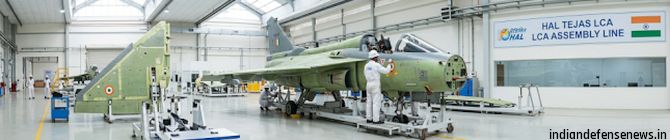
Hindustan Aeronautics Limited (HAL) has announced that deliveries of the TEJAS MK-1A fighter aircraft to the Indian Air Force are now expected to begin by August or September 2026, after repeated delays stemming from GE F404 engine supply shortages and extended certification requirements. HAL has already received six engines from GE Aerospace, with an additional 15 to 20 engines anticipated during FY27, which is expected to resolve the supply chain bottleneck that had been stalling the program. Notably, approximately 30 TEJAS MK-1A aircraft have already been manufactured, flight-tested, and are ready, awaiting only combat-ready powerplants for formal induction into the IAF, demonstrating HAL's proactive production strategy. From a financial perspective, HAL reported revenues of ₹33,050 crore in FY26, a 7% year-on-year increase, with an expanded order book reaching ₹2.54 lakh crore, and is guiding for double-digit revenue growth in FY27 contingent on successful TEJAS MK-1A and HTT-40 deliveries. Goldman Sachs maintained a neutral rating on HAL stock with a target price of ₹5,225, emphasizing that successful execution of TEJAS MK-1A deliveries will be critical to restoring investor confidence.
Key Takeaways
- 1. **Engine Supply Resolution is Critical:** The stabilization of GE F404 engine supplies, with 15–20 additional engines expected in FY27, represents the single most important factor in enabling TEJAS MK-1A deliveries to the IAF, highlighting India's continued dependency on foreign propulsion systems for its indigenous fighter program.
- 2. **IAF Induction Timeline at Risk of Further Slippage:** With deliveries repeatedly pushed back and now targeted for late 2026, the IAF's operational squadron build-up using TEJAS MK-1A remains vulnerable to further delays if engine supply commitments from GE Aerospace are not met as scheduled.
- 3. **Proactive Manufacturing Strategy Demonstrates Industrial Readiness:** HAL's completion of approximately 30 airframes that are fully manufactured and tested — awaiting only engines — signals strong domestic aerospace manufacturing capability, even if final induction timelines remain dependent on foreign supply chains.
- 4. **Strategic Self-Reliance Gap Exposed:** The TEJAS MK-1A program's repeated delays due to imported engine shortages underscores the urgency of accelerating India's indigenous engine development programs, such as the Kaveri derivative and the proposed DRDO-GE co-development engine, to reduce strategic vulnerabilities.
- 5. **Financial and Strategic Confidence Tied to Delivery Execution:** HAL's projected double-digit revenue growth, expanding ₹2.54 lakh crore order book, and investor confidence are all significantly dependent on timely TEJAS MK-1A deliveries, making this program not only a military priority but also a key indicator of India's defence-industrial credibility.