U.S. Marine Forces Train for Capturing Isolated Islands During Military Drills in the Philippines

Summary
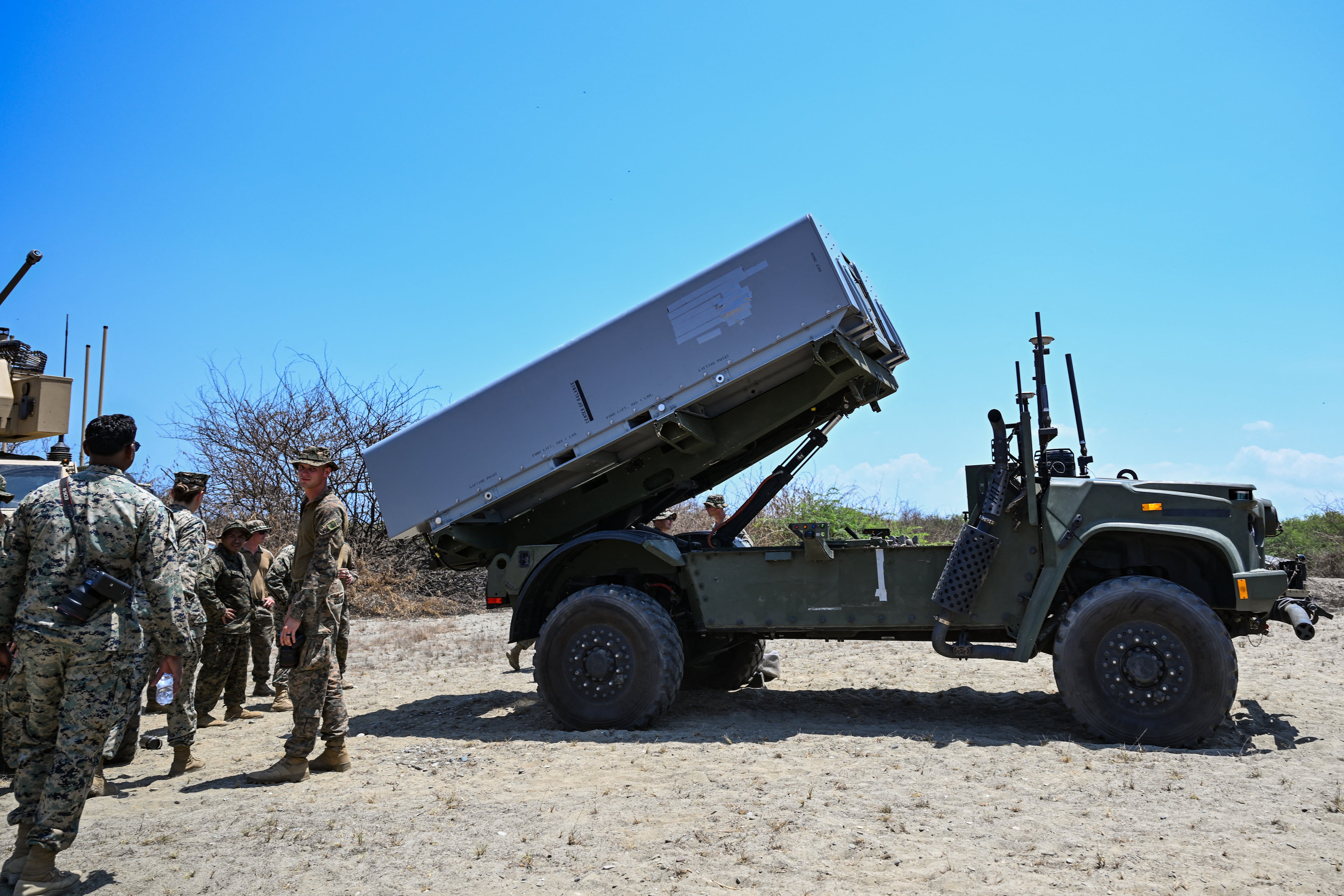
The 3rd Marine Littoral Regiment (3rd MLR), a Hawaii-based unit of over 2,000 personnel, participated in Exercise Balikatan 2026 in the Philippines from April 20 to May 8, conducting dispersed expeditionary operations across 17 locations throughout the archipelago. A central focus of the exercise was maritime key terrain security operations, during which the regiment deployed NMESIS anti-ship missile launchers to three separate islands in the Batanes Island chain — located closer to Taiwan than to the Philippine mainland — marking a significant expansion from the previous year's single-island deployment. The regiment also demonstrated its Marine Air Defense Integrated System (MADIS), a counter-drone platform mounted on JLTVs, during an integrated air defense exercise in Zambales, where crews prioritized refining their tactics and tracking procedures over simply achieving maximum drone kills. Now in its fourth Balikatan participation, the 3rd MLR used the exercise to validate its unique capabilities across three subordinate elements: the Littoral Combat Team, the Littoral Anti-Air Battalion, and the Littoral Logistics Battalion, all designed to operate in contested coastal environments alongside allied forces. Regiment officials emphasized that the MLR represents a modernized, purpose-built force continuously evolving through advanced sensing, survivable command-and-control tactics, and multi-domain operations to remain effective in the Indo-Pacific region.
Key Takeaways
- 1. The 3rd MLR expanded its NMESIS anti-ship missile deployments to three Batanes Islands this year, up from one island during the previous Balikatan exercise, signaling a growing focus on controlling the strategically vital Luzon Strait
- 2. The regiment's unique structure — comprising combat, anti-air, and logistics battalions — enables it to operate simultaneously across widely dispersed locations in contested littoral environments
- 3. The MADIS counter-drone system received its first live-fire opportunities in the Philippines, as crews face significant training restrictions when operating from their home base in Hawaii
- 4. Despite NMESIS not yet having fired an actual missile in the Philippines, simulated fire missions provided valuable operational experience for crews in real-world geographic conditions
- 5. The 3rd MLR, alongside the 12th MLR in Okinawa, represents the U.S. Marine Corps' forward-positioned modernization effort in the Asia-Pacific, designed to support allied forces and deter potential adversaries in the region