Pakistan Military Successfully Conducts Trial of Fatah-4 Conventionally-Armed Surface-Launched Cruise Missile

Summary
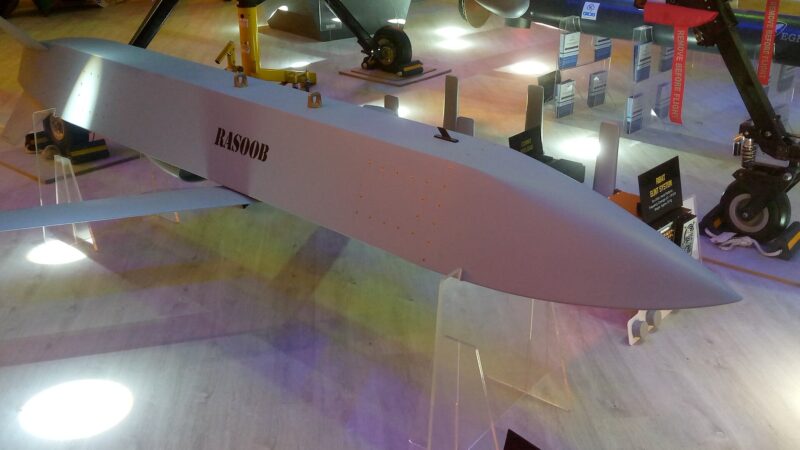
Pakistan's Army Rocket Force Command (ARFC) conducted a successful test firing of the Fatah-4, an indigenously developed ground-launched cruise missile with a reported range of 750 km, on 14 May, with the Inter-Services Public Relations directorate describing it as a training exercise suggesting the system is nearing or has achieved operational readiness. The Fatah-4 is not an entirely new design but rather a conventional-use derivative of the established Babur nuclear-capable cruise missile family, inheriting its sophisticated TERCOM and DSMAC guidance systems that enable terrain-hugging flight profiles capable of defeating enemy air defences. Footage released by ISPR revealed a tight circular error probable upon target impact, indicating the presence of a terminal-stage seeker, while the use of an airburst warhead configuration suggests optimization for maximizing blast effect against soft or area targets. The missile shares its design lineage with the Harbah NG, a naval ship-launched cruise missile tested from an Azmat-class fast attack craft in 2021, demonstrating Pakistan's deliberate strategy of creating conventional variants of strategic weapons systems across all three military services. This approach represents a significant evolution in Pakistan's broader missile doctrine, transitioning platforms once reserved exclusively for nuclear deterrence into versatile conventional precision-strike capabilities deployable across land and naval domains.
Key Takeaways
- 1. Pakistan is systematically converting its nuclear-capable missile platforms into conventional precision-strike weapons, signaling a maturing and diversifying deterrence strategy that operates below the nuclear threshold
- 2. The Fatah-4's 750 km range and high precision gives Pakistan a significant conventional stand-off strike capability that could threaten critical infrastructure and military installations deep within adversary territory
- 3. The use of proven TERCOM and DSMAC navigation technology inherited from the Babur series provides the Fatah-4 with strong penetration capability against modern air defence systems through low-altitude terrain-hugging flight profiles
- 4. The classification of the test as a "training fire" strongly implies the Fatah-4 is at or near full operational deployment within the ARFC, meaning this capability is likely already integrated into Pakistan's conventional warfighting plans
- 5. Pakistan's parallel development of the ground-based Fatah-4 and naval Harbah NG from the same Babur-derived airframe demonstrates a cost-effective multi-domain strike strategy, complicating adversary defence planning across both land and maritime theatres