Six-Month Progress Report: Pakistan's Growing Market for Jet-Powered Kamikaze Drone Munitions

Summary
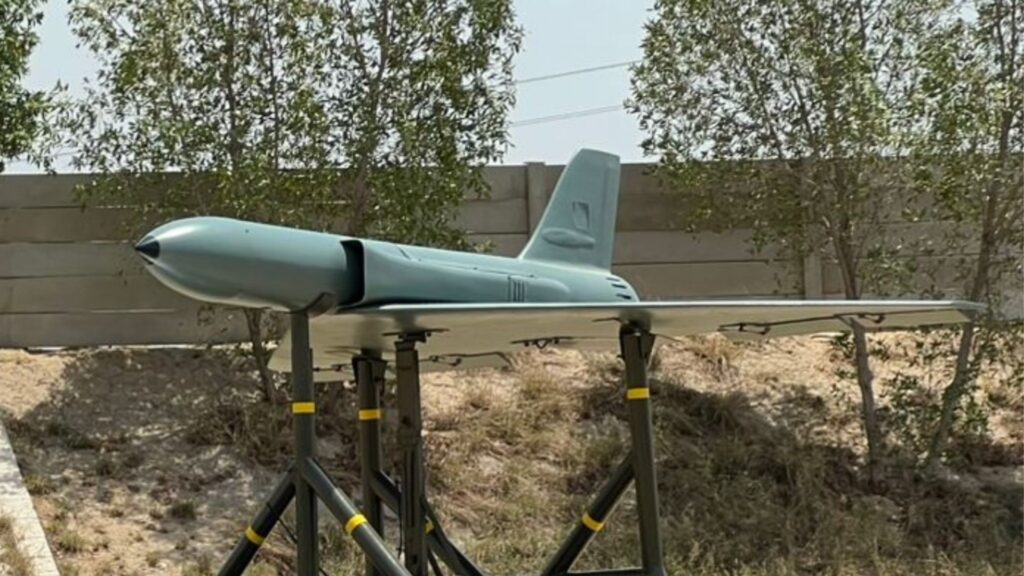
A follow-up analysis by Quwa Defence News reveals that Pakistan has significantly shifted its approach to One-Way Effector (OWE) munitions between November 2025 and April 2026, moving from an uncoordinated accumulation of relevant technologies to a deliberate and active development strategy. Previously, Pakistan's state-owned enterprises — including NESCOM, GIDS, and NASTP — possessed the technical building blocks for jet-powered OWEs through various loitering munition and small cruise missile programs, but lacked a unified blueprint to exploit these capabilities cohesively. By April 2026, both private and state-owned defence companies had publicly unveiled dedicated jet-powered OWE designs, most notably Woot-Tech Aerospace's HiMark-25(TJ) and GIDS's Baaz Delta, signalling a clear intent to operationalize this class of weapon. These developments suggest that at least one branch of Pakistan's armed services has formally expressed demand for such munitions, helping to resolve the previously identified structural risk of ambiguous intent. However, challenges around inter-service coordination, siloed procurement requirements, and production constraints remain partially unresolved, indicating that Pakistan's OWE strategy is still maturing rather than fully consolidated.
Key Takeaways
- 1. **Strategic Shift Confirmed:** Pakistan has transitioned from inadvertently developing OWE-adjacent technologies to purposefully designing and procuring jet-powered one-way attack munitions, representing a meaningful doctrinal and industrial evolution.
- 2. **New Systems Unveiled:** The HiMark-25(TJ) by private firm Woot-Tech Aerospace (250 km range, 25 kg warhead) and GIDS's Baaz Delta mark Pakistan's first dedicated publicly revealed jet-powered OWE platforms, complementing longer-range systems like the Sarfarosh/Sarkash (1,000 km) and Blaze 75 (500 km).
- 3. **IADS Saturation as Core Strategic Goal:** The fundamental military advantage Pakistan seeks from OWEs is the ability to overwhelm enemy Integrated Air Defence Systems (IADS) through large-scale, high-speed simultaneous strikes — a capability with direct implications for regional deterrence against India.
- 4. **Structural Weaknesses Persist:** Three of the four originally identified risks — siloed service-specific requirements, lack of tri-service coordination, and production constraints — remain active concerns and could undermine the scalability and operational effectiveness of Pakistan's OWE strategy.
- 5. **Civil-Military Industrial Collaboration Emerging:** The entry of private-sector player Woot-Tech Aerospace alongside state-owned GIDS/NESCOM suggests a broadening of Pakistan's defence-industrial base, potentially accelerating development timelines and introducing competitive dynamics into OWE procurement.