A Historical Review of Pakistan Army's Ground-Based Air Defence Development and Modernization (2007–2026)

Summary
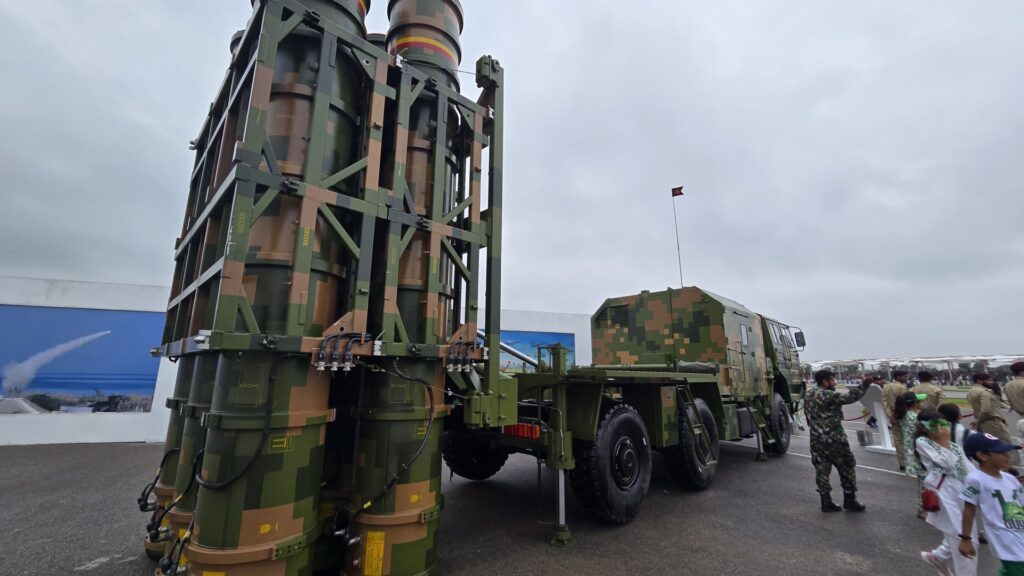
Over a nearly two-decade period spanning 2007 to 2026, the Pakistan Army undertook a comprehensive transformation of its air defence capabilities, evolving from a force almost entirely dependent on short-range MANPADS systems with coverage limited to 20–25 km into a sophisticated multi-layered integrated air defence architecture capable of engaging targets beyond 125 km. Prior to this transformation, the Army possessed no independent medium- or long-range surface-to-air missile capability, relying exclusively on the Pakistan Air Force's Air Defence Ground Environment, while India was simultaneously building a formidable arsenal of Russian-origin S-300 and Buk SAM systems that created a significant strategic imbalance. The modernization journey encompassed several critical procurement milestones, including the acquisition of FM-90 and LY-80 systems, the induction of the HQ-9/P long-range SAM, and the establishment of a dedicated battle management architecture to coordinate these layered capabilities. The retrospective draws upon authoritative primary sources including ISPR announcements, Ministry of Defence Production yearbooks, and official procurement records to provide a comprehensive analytical account of procurement decisions, their strategic rationale, and shortcomings. Looking forward, the Pakistan Army now faces the emerging doctrinal challenge of transitioning from a deterrence-focused integrated air defence posture to one capable of absorbing sustained, multi-axis aerial attacks including mass drone and loitering munition threats, with the ultimate goal of developing a tri-service IADS architecture.
Key Takeaways
- 1. **Critical Capability Gap Pre-2010s:** Before modernization, the Pakistan Army had virtually no independent medium or long-range air defence capability, leaving ground formations entirely dependent on PAF coverage and strategically vulnerable compared to India's growing SAM inventory.
- 2. **Asymmetric Strategic Pressure Drove Procurement:** India's acquisition of advanced Russian-origin S-300 and Buk SAM systems throughout the 1990s and 2000s created a significant air defence imbalance that directly motivated Pakistan's accelerated ground-based air defence modernization program.
- 3. **Multi-Layered Architecture Achieved:** Pakistan successfully built a tiered air defence system incorporating MANPADS, SHORAD, medium-range (LY-80/HQ-16), and long-range (HQ-9/P) SAM layers, supported by dedicated battle management infrastructure — representing a fundamental doctrinal and structural transformation.
- 4. **Emerging Drone Threat Requires New Doctrine:** The proliferation of mass drone swarms and loitering munitions represents a significant next-generation challenge that existing SAM-centric architectures were not designed to address, necessitating urgent investment in dedicated Counter-UAS solutions and doctrinal adaptation.
- 5. **Tri-Service Integration Remains the Strategic Goal:** The retrospective identifies the need to move beyond an Army-centric air defence identity toward a fully integrated tri-service IADS architecture, suggesting that inter-service coordination and unified command structures will be critical to Pakistan's future air defence effectiveness.