Pakistan Shifts Toward Deep Conventional Strike Capabilities One Year Following the Bunyan-un-Marsoos Operation
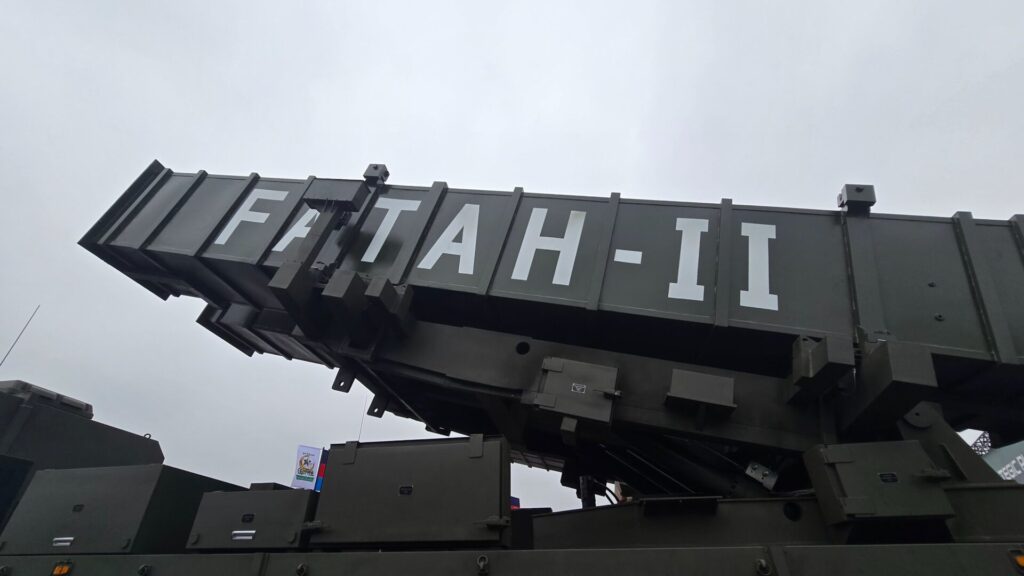

Summary
One year after the May 2025 conflict with India, Pakistan's military has undergone a fundamental strategic realignment in its conventional deterrence doctrine, as highlighted in a video released by the Inter Services Public Relations (ISPR) ahead of the Joint Services Press Conference. Prior to the conflict, Pakistan relied on a "denial model" of deterrence, which aimed to prevent India from achieving clean military outcomes, demonstrated effectively during the 2019 Balakot crisis when Pakistan's Swift Retort engagement helped de-escalate tensions within 48 hours. However, the May 2025 conflict exposed the limitations of this approach, as India absorbed its air-to-air losses and continued escalating through drone strikes, smart munitions, and eventually BrahMos missile strikes against Pakistani Air Force airbases, proving that cost imposition alone was insufficient to halt escalation. Pakistan has consequently shifted to what analysts describe as "deprecation-centric deterrence," focused on rapidly degrading India's warfighting infrastructure — including aircraft, air defense systems, fuel depots, munitions stores, and command nodes — to the point where sustaining a military campaign becomes materially impossible. This strategic pivot is now the driving force behind all major Pakistani defence procurements and organizational changes, including new satellite launches, missile tests, and drone manufacturing facilities announced at the May 7th, 2026 press conference.
Key Takeaways
- 1. **Doctrine Shift:** Pakistan has moved from a defensive denial-based deterrence model to an offensive "deprecation-centric" strategy aimed at destroying India's warfighting capacity rather than merely blocking individual operations
- 2. **Failure of Previous Strategy:** The May 2025 conflict demonstrated that imposing localized costs was insufficient, as India escalated beyond air-to-air engagements to strike Pakistani airbases with BrahMos missiles despite suffering losses
- 3. **Infrastructure Targeting:** Pakistan's new deterrence framework explicitly targets high-value warfighting assets such as air defense batteries, command nodes, fuel depots, and munitions stores to make sustained Indian military campaigns materially unviable
- 4. **Procurement Realignment:** All major defence acquisitions over the past year — satellites, precision missiles, and drone production facilities — are strategically coherent investments specifically designed to support large-scale, deep conventional strike capabilities
- 5. **Regional Stability Implications:** This doctrinal evolution represents a significant escalation in South Asia's security competition, potentially lowering the threshold for rapid and extensive conventional strikes, raising concerns about crisis stability between two nuclear-armed states