Painted Portraits Restore the Forgotten Faces of Long March Soldiers to Their Families

Summary
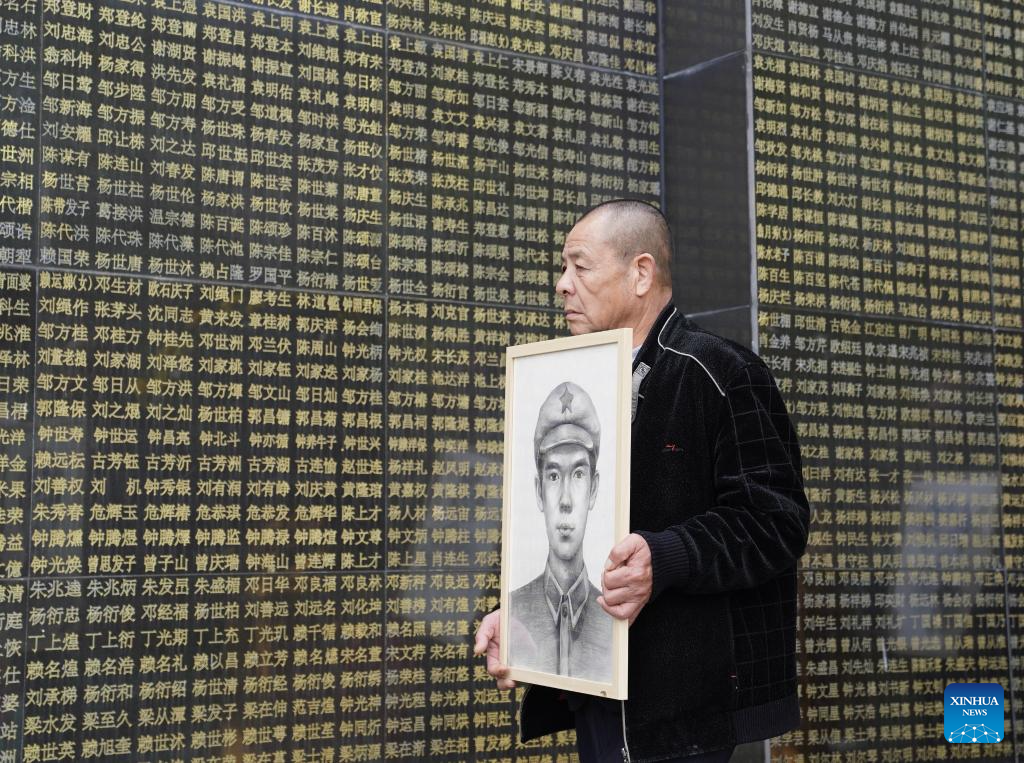
A portrait restoration project in Jiangxi Province, China, is reuniting aging descendants of Red Army martyrs with the faces of their fallen relatives who perished during the historic Long March of the 1930s. College students from Anhui Normal University created 151 carefully reconstructed portraits by studying family photographs, consulting relatives, and incorporating detailed physical descriptions to ensure accuracy and emotional authenticity. The project addresses a profound historical gap in Ruijin County, where over 113,000 residents joined the Red Army and more than 10,800 Long March soldiers died, many leaving behind no photographic record whatsoever. Beyond artistic reconstruction, modern technological tools including big data analysis, DNA identification, cross-provincial archive sharing, and social media platforms are now being employed to reconnect martyr identities with surviving family lineages. The broader initiative, centered in a region that includes Yudu County — the official starting point of the Long March — reflects China's intensifying institutional effort to formally honor and document the sacrifices of revolutionary-era military personnel.
Key Takeaways
- 1. **Historical Military Scale:** Ruijin County alone contributed over 113,000 soldiers to the Red Army, with 30,000+ participating in the Long March and nearly 11,000 dying, highlighting the enormous human cost of this defining military campaign
- 2. **State-Supported Commemoration:** The portrait project represents a deliberate, government-aligned effort to reinforce revolutionary military heritage and martyrdom narratives central to Chinese Communist Party identity and legitimacy
- 3. **Technological Intelligence Applied to Historical Records:** The integration of DNA identification, big data, and cross-provincial archive sharing signals China's application of modern intelligence-gathering infrastructure toward historical military documentation and verification
- 4. **Soft Power and Patriotic Education:** Involving university students in creating martyr portraits serves dual purposes — preserving military history while actively cultivating patriotic sentiment and revolutionary loyalty among younger generations
- 5. **Strategic Memorialization of the Long March:** With Yudu County's martyrs' memorial registering 16,000+ named soldiers, China is systematically institutionalizing Long March memory, reinforcing its military-historical narrative both domestically and as a symbol of national resilience internationally