Strategic Power Through the Skies: Global Military Air Transport Capabilities and Where India Stands
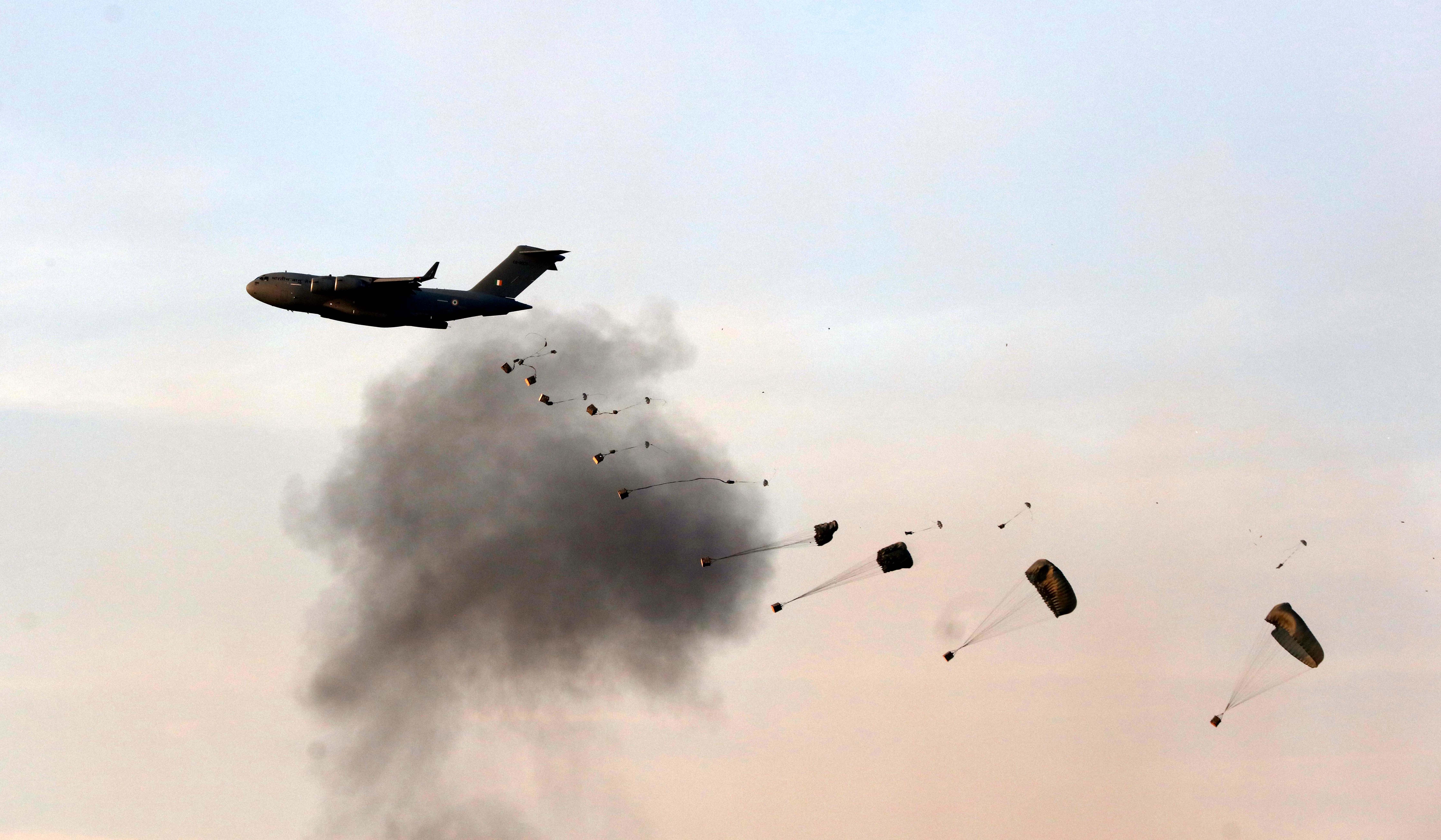

Summary
Military airlift capability represents far more than a logistical support function — it is a direct expression of a nation's geopolitical reach and its ability to rapidly translate political decisions into physical military presence across vast distances. The United States maintains an overwhelming dominance in this domain, with USAF Mobility Command operating over 220 C-17 Globemaster IIIs and 52 C-5M Super Galaxies, achieving a combined strategic lift capacity of 50 million ton-miles per day, a figure no other nation comes close to matching. China has emerged as the most significant challenger, having developed the indigenous Y-20 strategic airlifter with a fleet of approximately 85-100 airframes now active, marking the first time the PLAAF possesses genuine intercontinental airlift capability. The article highlights that in an era of contested sea lanes, disrupted overland routes, and rapidly evolving crises, air mobility has shifted from a peripheral support role to a central pillar of deterrence strategy and strategic initiative. India's position within this global airlift landscape is also examined, suggesting that fleet size and composition have become critical indicators of a nation's broader geopolitical ambitions and military readiness.
Key Takeaways
- 1. **US Air Dominance Remains Unmatched:** The USAF's airlift capacity of 50 million ton-miles per day sets a benchmark no rival nation currently approaches, giving the United States unparalleled ability to project military power globally
- 2. **China's Rapid Airlift Development Is a Strategic Shift:** The indigenous Y-20 program, now equipped with domestic WS-20 engines, signals China's deliberate effort to build credible power projection capabilities and reduce dependence on foreign aviation technology
- 3. **Airlift Capability Is Now a Core Deterrence Metric:** Defence planners increasingly monitor airlift gaps between major powers with the same rigor as nuclear force structures or combat aircraft ratios, elevating logistics to a frontline strategic concern
- 4. **Speed of Crisis Response Defines Strategic Advantage:** Nations capable of sustained, high-volume sortie generation over consecutive days — not merely peak payload — hold decisive advantage in rapidly evolving conflict or humanitarian scenarios
- 5. **India's Airlift Posture Carries Significant Implications:** India's current and future military transport fleet composition will directly determine its capacity to act as a credible regional power and independent strategic actor in an increasingly competitive Indo-Pacific environment