Pakistan's Expanding Military Capabilities Across Multiple Domains: Submarines, Precision Missiles, and Reconnaissance Satellites

Summary
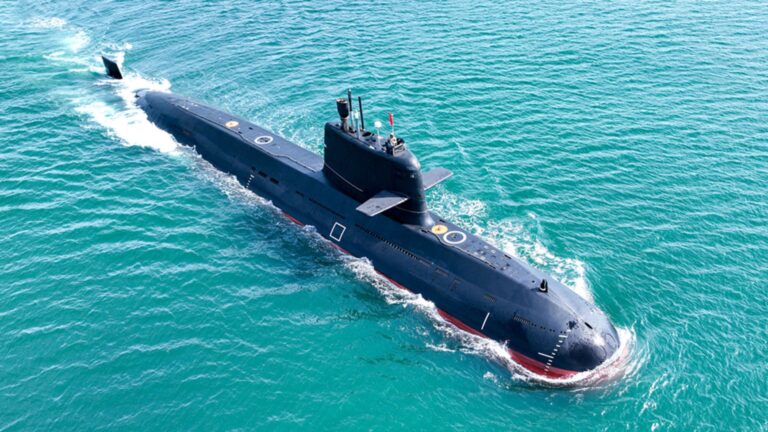
Pakistan is undergoing a significant multi-domain military expansion, highlighted by the commissioning of the PNS/M Hangor, the lead vessel of the Hangor-class (S26) submarine program, which is a derivative of China's Yuan-class Type 039B platform featuring Stirling-cycle air-independent propulsion (AIP) technology. This submarine program, contracted around 2015 for eight vessels, represents a strategic pivot to China after an earlier deal with Germany's ThyssenKrupp Marine Systems collapsed between 2009 and 2010 due to Pakistan's fiscal constraints and the aftermath of the Great Recession. Once all eight submarines are delivered — four built in China and four domestically at Karachi Shipyard and Engineering Works — Pakistan's AIP-equipped submarine fleet will grow from three Agosta 90B boats to eleven platforms total, dramatically enhancing the Navy's underwater warfare capacity. Beyond naval developments, Pakistan's Army Rocket Force Command conducted its first training launch of the Fatah-II guided missile, signaling an accelerating focus on precision strike and precision fire capabilities. The article also highlights the completion of Pakistan's electro-optical satellite constellation with the PRSC-EO3 launch, alongside notable naval weapons tests including the SMASH anti-ship ballistic missile and the Taimoor anti-ship cruise missile, collectively pointing to a rapidly maturing and diversifying Pakistani defense industrial base.
Key Takeaways
- 1. **Naval Underwater Dominance:** The commissioning of the Hangor-class submarine marks a transformational leap for Pakistan Navy, more than tripling its AIP submarine fleet and significantly enhancing its strategic deterrence and anti-access capabilities in the Arabian Sea
- 2. **Strategic Shift Toward China:** The collapse of the German Type 214 submarine deal and subsequent pivot to China's S26 platform reflects Pakistan's deepening defense-industrial relationship with Beijing as a primary military technology partner
- 3. **Precision Strike Advancement:** The Fatah-II guided missile's first training launch by the Army Rocket Force Command demonstrates Pakistan's deliberate effort to develop credible, long-range precision land-attack capabilities that could reshape conventional battlefield dynamics
- 4. **Space-Based Intelligence Capability:** The completion of the PRSC-EO3 electro-optical satellite constellation gives Pakistan an indigenous space-based reconnaissance capability, enhancing situational awareness and target acquisition across all military domains
- 5. **Maturing Defense Industry:** The successful testing of the SMASH anti-ship ballistic missile and Taimoor anti-ship cruise missile signals Pakistan's growing indigenous missile development capacity, reducing reliance on foreign systems and strengthening its overall anti-ship and maritime denial posture