Chinese Premier Urges Greater Tangible Progress in China-U.S. Relations During Senate Delegation Meeting

Summary
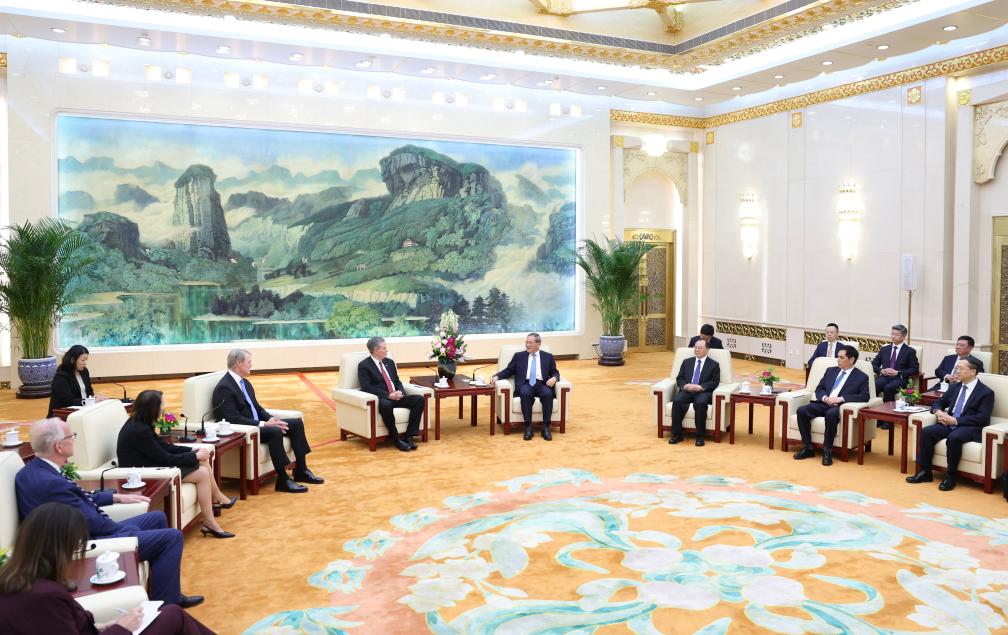
Chinese Premier Li Qiang met with a bipartisan delegation of U.S. senators led by Steve Daines at the Great Hall of the People in Beijing on May 7, 2026, emphasizing China's readiness to collaborate with the United States to translate high-level diplomatic consensus into concrete outcomes. Li referenced the February phone call between President Xi Jinping and President Donald Trump as a foundational moment that established fresh strategic guidance for advancing bilateral relations, signaling that both nations should build upon this momentum. The Premier stressed that historical experience demonstrates mutual respect, peaceful coexistence, and win-win cooperation are the only viable frameworks for two major powers to constructively engage, explicitly rejecting zero-sum competition and confrontational approaches. Li also underscored the critical importance of maintaining stable and predictable economic and trade relations, framing this as being fundamentally in the interests of both nations and beneficial to global stability. Significantly, Li issued a firm warning regarding Taiwan, identifying it as China's foremost "red line" in bilateral relations and urging the U.S. Congress to handle China-related issues with caution and restraint.
Key Takeaways
- 1. **Taiwan Remains a Non-Negotiable Red Line:** Premier Li explicitly warned that the Taiwan question represents China's core strategic interest and the primary boundary that must not be crossed, signaling zero tolerance for U.S. legislative interference on this issue
- 2. **High-Level Diplomatic Framework Is Active:** The February Xi-Trump phone call has established a strategic roadmap guiding current China-U.S. engagement, suggesting back-channel diplomacy is actively shaping military and security guardrails
- 3. **China Prioritizes Dialogue Over Confrontation:** Beijing is deliberately positioning itself as favoring cooperative engagement, rejecting zero-sum competition in what appears to be a strategic effort to stabilize relations amid ongoing geopolitical tensions
- 4. **Congressional Influence Is Being Directly Targeted:** The meeting with U.S. senators reflects China's calculated strategy to engage legislative stakeholders directly, aiming to moderate potentially hawkish U.S. congressional positions on China-related security legislation
- 5. **Economic Stability Linked to Security Architecture:** Li's emphasis on predictable trade relations underscores China's broader strategic position that economic interdependence serves as a stabilizing force, effectively using trade as a deterrent against military and political escalation