Beijing Demands Immediate Halt to Fighting, Rejects Escalation, and Emphasizes Diplomatic Solutions to Iran Crisis: Chinese Foreign Minister
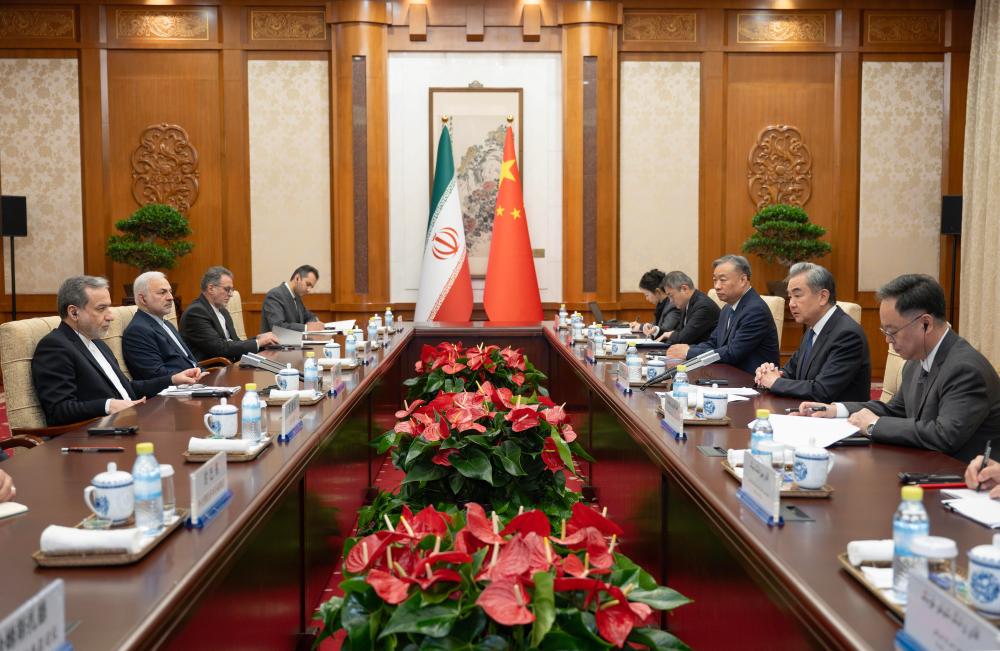

Summary
Chinese Foreign Minister Wang Yi met with Iranian Foreign Minister Seyyed Abbas Araghchi in Beijing on May 6, 2026, where China firmly called for an immediate and complete ceasefire while opposing any renewed military conflict and prioritizing diplomatic negotiations over armed confrontation. A significant point of discussion was the international community's concern over the safety and normalcy of passage through the strategically critical Strait of Hormuz, with Wang urging all relevant parties to respond promptly to global calls for its restoration. Iran's foreign minister briefed Wang on the progress of Iran-U.S. negotiations, affirming Tehran's commitment to protecting national sovereignty while continuing to pursue a comprehensive and permanent peaceful resolution. Iran expressed strong support for China's four-point Middle East peace proposal and acknowledged Beijing's constructive diplomatic efforts, placing significant trust in China to continue mediating and preventing further regional deterioration. Wang reaffirmed China's support for Iran's sovereignty and security, acknowledged Iran's right to peaceful nuclear energy use while appreciating its commitment against nuclear weapons development, and encouraged broader Gulf regional dialogue to establish a lasting peace and security architecture.
Key Takeaways
- 1. **Strait of Hormuz as Critical Strategic Flashpoint:** China's explicit call for restoring safe passage through the Strait of Hormuz underscores the waterway's enormous global strategic and economic importance, with its disruption threatening international energy supplies and trade routes.
- 2. **China Positioning as Key Middle East Mediator:** Beijing is actively leveraging its comprehensive strategic partnership with Iran to position itself as an indispensable diplomatic broker in Middle Eastern conflicts, directly challenging Western-dominated peace frameworks.
- 3. **Iran-China Strategic Alignment Deepening:** Iran's endorsement of China's four-point Middle East peace proposal and reaffirmation of the one-China principle signals a strengthening geopolitical axis between the two nations against perceived Western pressure.
- 4. **Nuclear Dimension Carefully Managed:** China's dual acknowledgment of Iran's right to peaceful nuclear energy alongside appreciation for its non-weaponization commitment represents a calculated diplomatic balance designed to keep Iran within negotiated frameworks while opposing military escalation.
- 5. **Regional Security Architecture Ambitions:** Both nations' support for a new post-war regional security and development architecture signals a coordinated effort to reshape Middle Eastern geopolitical order away from U.S.-led structures toward a multipolar framework.