At the Origin of the Long March, Chinese Citizens Draw Personal Resilience and Inspiration from Revolutionary History

Summary
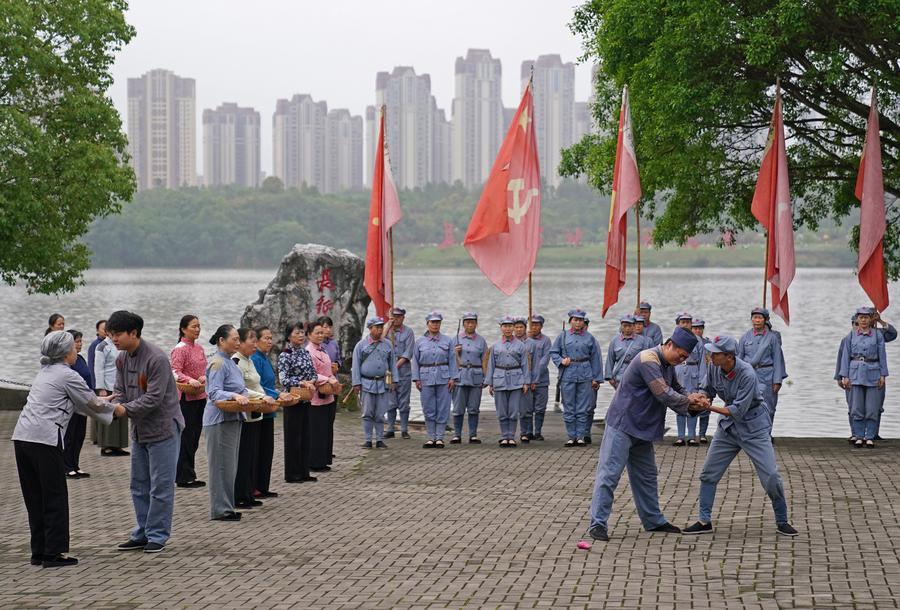
Yudu County in Jiangxi Province, China, serves as the historic departure point of the Long March, where in 1934 over 80,000 Red Army soldiers embarked on a grueling 12,500-kilometer strategic military retreat that fundamentally shaped modern Chinese history. To commemorate the 90th anniversary of the Long March's completion, local volunteers — many of them descendants of Red Army soldiers — stage an outdoor performance called "Farewell," recreating the emotional scene of civilians sending off Communist Party-led troops, including the remarkable community sacrifice of making 200,000 pairs of straw sandals and dismantling personal property to construct makeshift bridges. The site has evolved beyond a memorial location into a pilgrimage destination where contemporary Chinese citizens benchmark their personal and professional struggles against the extreme hardships endured by revolutionary soldiers. Visitors such as businessman Chen Jianguo explicitly draw psychological strength from the Long March's legacy, using the historical narrative of soldiers departing with uncertain survival odds to reframe their own modern-day pressures, including economic challenges in China's transforming textile industry. The site is also being deliberately used as an experiential educational tool for younger generations, with parents bringing children to gain a visceral understanding of adversity that formal classroom instruction cannot adequately convey.
Key Takeaways
- 1. **Revolutionary Heritage as Strategic Soft Power:** The Chinese state actively preserves and promotes Long March commemorations as a tool for reinforcing Communist Party legitimacy, national identity, and ideological cohesion among civilian populations
- 2. **Military History Shaping Civil Resilience:** The Long March's military significance — a strategic retreat that saved the Red Army and ultimately enabled CPC's eventual victory — continues to be leveraged to cultivate a culture of perseverance and sacrifice within Chinese society
- 3. **Patriotic Education Infrastructure:** Sites like Yudu function as state-endorsed patriotic education venues, reflecting China's broader defence and security strategy of maintaining ideological unity and civilian support for military and Party narratives
- 4. **90th Anniversary Significance:** The deliberate amplification of Long March commemorations in 2025-2026 signals an intensified governmental effort to reinforce revolutionary military values at a time of increasing domestic economic pressures and international geopolitical tensions
- 5. **Civil-Military Cultural Continuity:** The participation of Red Army descendants in public performances demonstrates China's systematic approach to sustaining intergenerational connections to military sacrifice, reinforcing the social contract between civilians and the armed forces central to PRC defence ideology