The F-35: An Engineering Marvel Optimized for Conflicts It May Never Fight

Summary
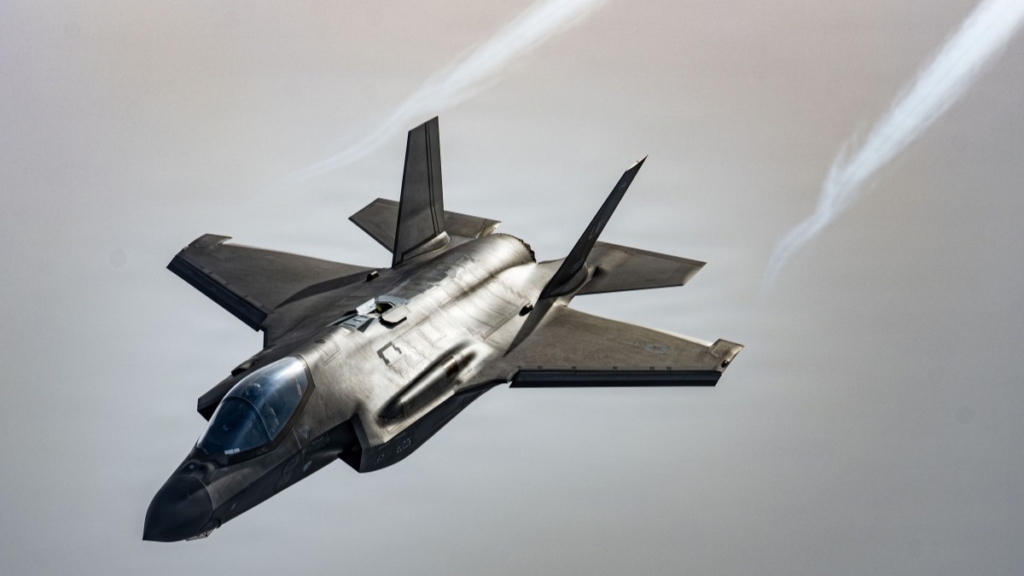
The F-35 Lightning II, despite being the most expensive Major Defense Acquisition Program in history with projected lifetime costs exceeding two trillion dollars, may be poorly suited for the type of large-scale, protracted conflict the United States could face against a peer competitor like China. While the aircraft has demonstrated impressive capabilities in recent operations against Iran — including stealth penetration, air defense suppression, and precision strikes — authors Ferrari and Prochnicki argue that short, well-planned campaigns against a degraded adversary are poor indicators of how the platform would perform in a sustained Pacific conflict. The F-35's vulnerabilities fall into two critical categories: its physical exposure to missile attacks on forward bases across the Western Pacific, and the profound sustainability challenges of maintaining such a complex, high-cost aircraft during a prolonged high-intensity war. The jet's extensive ground support requirements, including specialized maintenance facilities, diagnostic systems, and spare parts, create concentrated targets that adversaries can exploit to degrade sortie generation without ever shooting down a single aircraft. The authors ultimately advocate for a rebalanced force structure with fewer F-35s than currently projected, redirecting procurement dollars toward unmanned systems capable of being produced rapidly and at scale to better match the demands of modern warfare.
Key Takeaways
- 1. The F-35's $2 trillion lifetime program cost makes it virtually impossible to produce at the scale needed for a sustained, high-attrition conflict against a peer competitor like China
- 2. Wargames consistently show that most aircraft losses in a Taiwan scenario occur on the ground, where forward Pacific bases remain dangerously vulnerable to Chinese missile salvos
- 3. Even degraded Iranian mobile air defense systems managed to force an emergency F-35 landing, highlighting how China's far denser and more sophisticated air defense network poses an exponentially greater threat
- 4. The F-35's dispersal strategy as a response to base vulnerability is self-defeating, as it stretches already thin supply chains, fragments maintenance capacity, and reduces operational effectiveness
- 5. A balanced force mixing F-35 capabilities with scalable, expendable unmanned systems would better prepare the U.S. military for the realities of modern and future warfare