Pakistan Navy Successfully Conducts Test Launch of Taimoor Air-Launched Cruise Missile

Summary
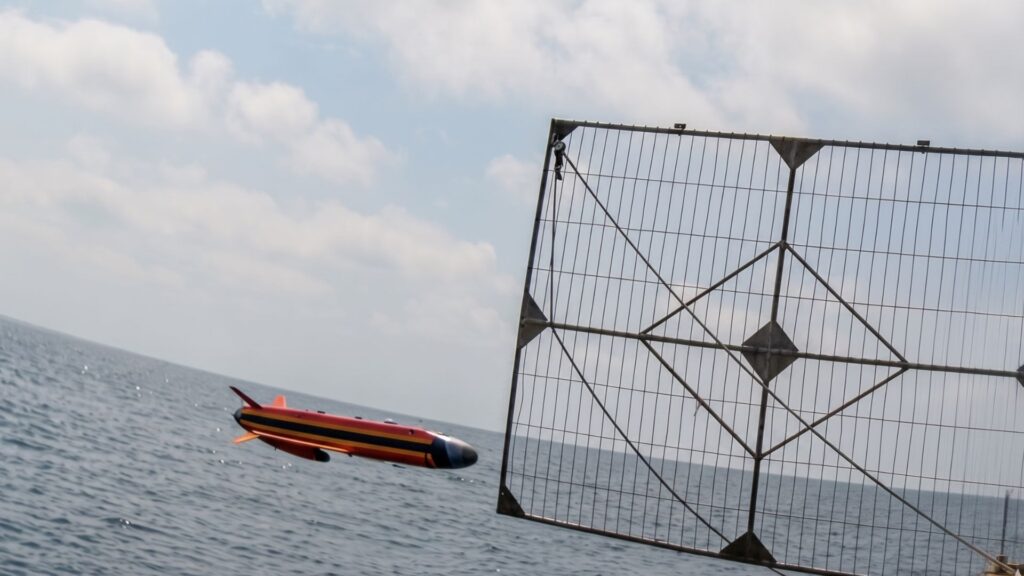
The Pakistan Navy conducted a test firing of the domestically developed Taimoor air-launched cruise missile (ALCM) on April 21st, representing a potentially significant enhancement to its anti-surface warfare capabilities. Developed by NESCOM and marketed through GIDS, the Taimoor has a operational range of 600 km and features an advanced multi-layered guidance system incorporating INS, satellite navigation, proprietary TERCOM/DSMAC terrain-hugging technology, and an imaging infrared terminal seeker, making it comparable in sophistication to NATO systems like the MBDA SCALP/Storm Shadow. The Taimoor serves as the conventional counterpart to Pakistan's nuclear-capable Ra'ad-2 strategic missile, and its development represents a direct answer to India's deployment of SCALP missiles on its Rafale fighter jets. While the exact launch platform used by the Pakistan Navy remains unclear, speculation points toward future integration with the forthcoming Sea Sultan long-range maritime patrol aircraft, which would give the PN its first dedicated maritime ALCM strike capability. This development marks a notable doctrinal transformation for the Pakistan Navy, which has traditionally depended on subsurface and surface-to-surface systems for power projection, now shifting toward airborne strike capabilities in the Indian Ocean region.
Key Takeaways
- 1. **Strategic Parity Move:** The Taimoor ALCM directly counters India's SCALP-equipped Rafale fighters, closing a significant capability gap between the two rival naval and air forces in the region
- 2. **Advanced Guidance Architecture:** The missile's multi-layered guidance system, combining INS, GPS/BeiDou, TERCOM, DSMAC, and IIR terminal seeker, gives it credible penetration capability against heavily defended targets, placing it on par with leading Western ALCM systems
- 3. **Doctrinal Transformation:** The Pakistan Navy's pursuit of air-launched cruise missile capability represents a fundamental shift away from its historical reliance on subsurface and surface-to-surface warfare, expanding its power projection doctrine into the aerial domain
- 4. **Sea Sultan Integration Potential:** Integration of the Taimoor with the forthcoming Sea Sultan maritime patrol aircraft could establish Pakistan's first dedicated maritime ALCM platform, significantly altering the strategic balance in the Indian Ocean
- 5. **Future Miniaturization Pipeline:** NESCOM's parallel development of smaller ALCMs, including the Rasoob 250 and AZB-81LR, suggests a longer-term strategy to field more versatile and platform-flexible cruise missile options suited to a broader range of naval aircraft