Why Washington's Warnings About Pakistani Missiles Are Really About Something Other Than ICBMs

Summary
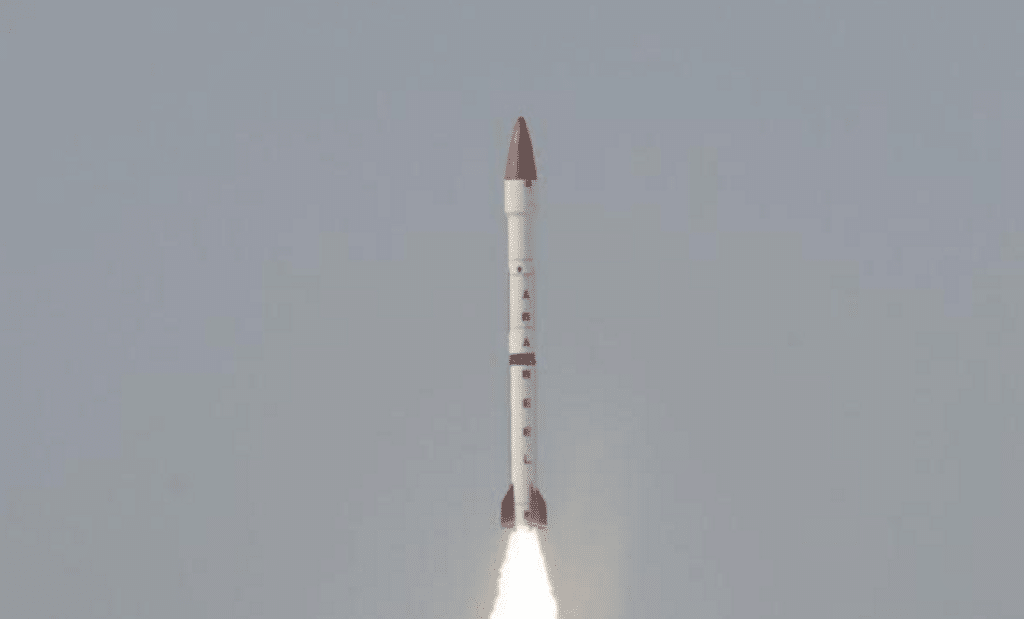
When US Director of National Intelligence Tulsi Gabbard testified before the Senate Intelligence Committee that Pakistan could potentially develop intercontinental ballistic missiles capable of reaching American soil, it triggered a wave of controversy, but defence analysts argue the ICBM framing fundamentally misrepresents what US intelligence is actually signalling. A technical examination of the 2026 Annual Threat Assessment reveals carefully hedged language — stating only that Pakistan will "probably continue to research" extended-range delivery systems — and notably, Pakistan remains the only country among the five flagged nations without an operational intercontinental-range missile. From an engineering standpoint, the leap from Pakistan's longest-range operational missile, the Shaheen-3 at 2,750 kilometres, to a true ICBM involves vastly more complex challenges than simply scaling up rocket size, encompassing advanced propellant chemistry, motor efficiency, and specialized casing materials that Pakistan has not yet mastered. Critically, the threat assessment's omission of India's operational Agni-5 — itself an ICBM-class missile — from the same list strongly suggests the framing serves a geopolitical purpose beyond objective technical assessment. Analysts contend that Pakistan's actual missile development trajectory is moving toward survivability and precision rather than extended range, reflecting a deterrence posture that remains fundamentally India-focused.
Key Takeaways
- 1. The US intelligence community's language around Pakistan's missiles is deliberately cautious and speculative, referencing research possibilities rather than confirmed ICBM development programs
- 2. The glaring omission of India's operational Agni-5 missile from the same threat assessment list suggests the framing reflects strategic and geopolitical considerations rather than purely technical threat evaluation
- 3. Bridging the gap between Pakistan's Shaheen-3 medium-range missile and a true ICBM represents an enormous engineering challenge requiring propellant chemistry, motor efficiency, and materials technology well beyond Pakistan's current demonstrated capabilities
- 4. Pakistan has no credible strategic incentive to develop ICBMs, as its nuclear deterrent doctrine is India-specific and the existing Shaheen missile family already provides sufficient coverage of all relevant Indian targets
- 5. Pakistan's actual missile development priorities appear to be shifting toward survivability, precision strike capabilities, and conventional deterrence tools — such as the Fatah guided rocket family and naval submarine platforms — rather than intercontinental range extension