Assessing the Pakistan Army's Requirements for Networked Precision Strike Capabilities

Summary
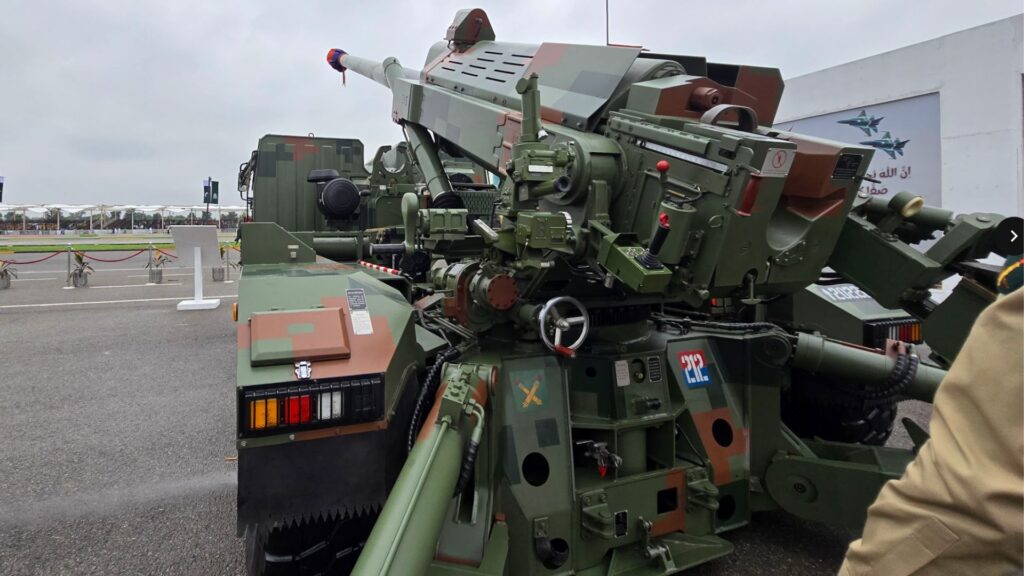
Over the past decade, the Pakistan Army has made substantial investments in building a comprehensive precision-fire ecosystem, spanning advanced artillery systems, precision-guided munitions, and a dedicated Army Rocket Force Command (ARFC) to oversee its growing ballistic and cruise missile arsenal. Alongside firing solutions, the PA has significantly expanded its Intelligence, Surveillance, Target Acquisition, and Reconnaissance (ISTAR) infrastructure through the deployment of multiple satellites, including hyperspectral imaging, electro-optical, and synthetic aperture radar systems, positioning itself for a highly capable regional surveillance network by 2030. However, the critical gap now identified is the middle-layer connectivity between the ISTAR infrastructure and the actual precision-strike platforms, where information-flow latency remains the central challenge to be resolved. The PA's newer platforms, such as the SH-15 howitzer, have already addressed some latency issues at the firing stage through integrated digital fire control systems that draw on GNSS/GPS data, but bridging the broader kill chain from sensor detection to munition launch still requires significant development. Without closing this middle-layer gap, the full operational and strategic value of the PA's considerable investments in both ISTAR and precision-strike capabilities risks being undermined by outdated targeting data and reduced strike effectiveness in dynamic battlefield conditions.
Key Takeaways
- 1. The Pakistan Army has established a dedicated Army Rocket Force Command (ARFC), signaling a formal institutional commitment to stand-off precision strike as a core warfighting capability
- 2. Rapid expansion of space-based ISTAR assets, including SAR and electro-optical satellites, is positioning Pakistan to develop one of the region's most sophisticated surveillance and targeting architectures by 2030
- 3. The most critical unresolved challenge is minimizing kill-chain latency between sensor detection and munition launch, representing the primary capability gap requiring investment and development
- 4. Domestic defense programs producing platforms like the AIMS mortar system and P251 howitzer reflect a strategic push toward self-sufficiency in precision-fire solutions, reducing dependence on foreign suppliers
- 5. Parallels with the Pakistan Air Force's precision-strike development suggest a broader joint-force modernization strategy, where networked, data-driven warfare is becoming the central organizing principle for Pakistan's military transformation