India's Maritime Dominance and Strategic Influence Over the Malacca Strait

Summary
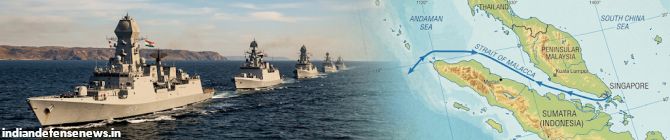
The Strait of Malacca, a critical global chokepoint situated between the Malay Peninsula and Sumatra, handles approximately 25% of global commerce, 35% of the world's maritime oil trade, and 20% of its natural gas, making it one of the most strategically vital waterways in the world. With its narrowest navigable width of just 2.7 km near Singapore's Phillips Channel and over 94,000 vessels transiting annually, the strait presents significant vulnerabilities including piracy, terrorism, and geopolitical tensions that demand active maritime oversight. India has strategically positioned itself as a regional maritime balancer by leveraging its geographical advantage through the Andaman and Nicobar Command (ANC), established in 2001, which operates just 600 km from the strait and conducts surveillance, anti-smuggling, and humanitarian operations across the region. India's forward naval bases, including INS Baaz, INS Utkrosh, INS Kohassa, INS Kardip, and INS Jarawa, collectively support reconnaissance, patrol, and logistics operations using advanced assets like P-8I Poseidon aircraft, reinforcing India's maritime reach. Meanwhile, China, facing its so-called "Malacca Dilemma" due to its 80% oil import dependency on this route, has pursued the "String of Pearls" strategy through infrastructure investments at Gwadar and Kyaukpyu to develop alternative land-based energy corridors, intensifying the strategic competition in the Indo-Pacific region.
Key Takeaways
- 1. **India's Strategic Geographic Advantage:** The Andaman and Nicobar Command's proximity of just 600 km from the Strait of Malacca gives India a powerful oversight capability, enabling it to monitor and influence one of the world's most critical maritime trade corridors
- 2. **Robust Naval Infrastructure:** India's network of forward bases — INS Baaz, INS Utkrosh, INS Kohassa, INS Kardip, and INS Jarawa — equipped with P-8I Poseidon maritime patrol aircraft and OPVs, significantly enhances India's power projection and surveillance capabilities in the Indo-Pacific
- 3. **China's Malacca Dilemma and Counter-Strategy:** China's overwhelming dependence on the Strait for 80% of its oil imports creates a critical strategic vulnerability, prompting Beijing to develop the "String of Pearls" port investments and CPEC as alternative energy corridors, directly challenging India's regional influence
- 4. **Persistent Security Threats:** The strait continues to face serious security challenges including piracy, smuggling, and terrorism, necessitating coordinated trilateral patrols by Malaysia, Indonesia, and Singapore, while India plays an increasingly important supporting role as a regional stabilizer
- 5. **Historical Maritime Legacy Driving Modern Strategy:** Drawing from Chhatrapati Shivaji Maharaj's 17th-century naval doctrine, India's contemporary maritime strategy reflects a long-standing recognition that naval dominance is essential for protecting national interests and projecting influence across critical global sea lanes