Shenzhou-21 Crew Successfully Concludes Third Round of Spacewalk Operations

Summary
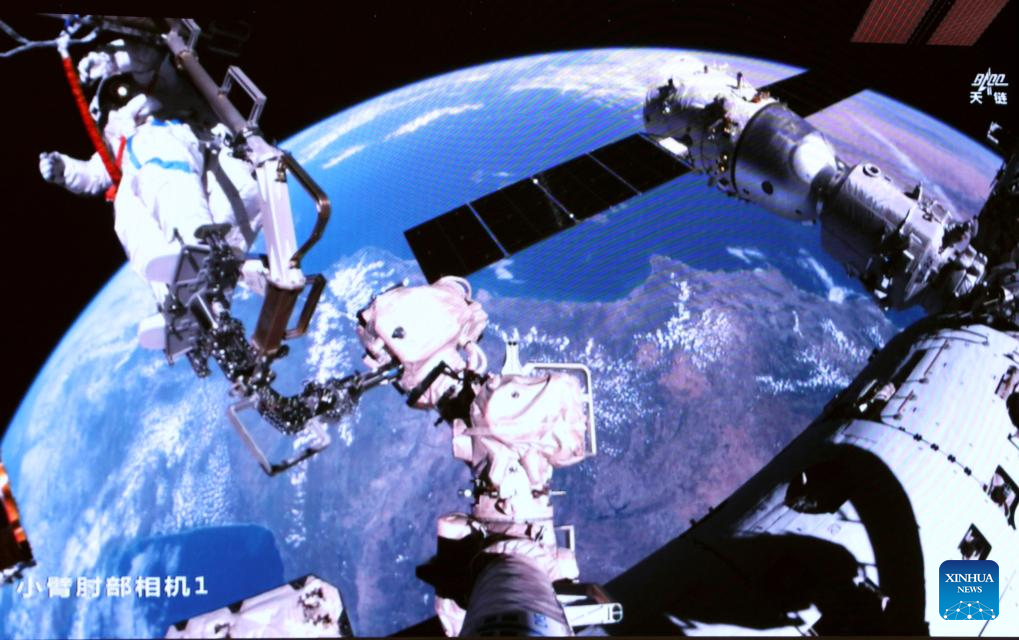
The three-member crew of China's Shenzhou-21 mission successfully completed their third series of extravehicular activities (EVAs) on April 16, 2026, aboard China's orbiting space station. The astronauts — Zhang Lu, Wu Fei, and Zhang Hongzhang — conducted a spacewalk lasting approximately 5.5 hours, concluding their tasks in the early morning hours of April 17, Beijing Time. The operation was supported by the station's robotic arm system and a ground-based control team at the Beijing Aerospace Control Center. A notable milestone was achieved during this mission, as astronaut Zhang Lu set a new national record by completing a total of seven extravehicular activities, surpassing all previous Chinese astronaut spacewalk records.
Key Takeaways
- 1. **Growing Spacewalk Proficiency:** China's space program is demonstrating increasing operational maturity, with crews executing complex multi-hour EVAs with growing regularity and precision.
- 2. **Record-Breaking Achievement:** Zhang Lu's seven total spacewalks establishes a new benchmark for Chinese astronaut EVA experience, reflecting deepening human spaceflight expertise.
- 3. **Advanced Robotic Capabilities:** The continued use of the space station's robotic arm in EVA support highlights China's expanding suite of autonomous and semi-autonomous space operational technologies.
- 4. **Strategic Military-Civil Space Dual-Use Potential:** Enhanced EVA capabilities and station maintenance expertise have direct implications for China's ability to conduct on-orbit servicing, satellite inspection, or potential space asset manipulation — all of strategic military relevance.
- 5. **Long-Duration Mission Competence:** The successful completion of multiple EVA series signals China's readiness to sustain long-term crewed operations in space, strengthening its position as a leading space power capable of challenging U.S. and allied dominance in the space domain.