Israeli and American Strikes Have Decimated Iran's Potential Chemical and Biological Weapons Infrastructure

Summary
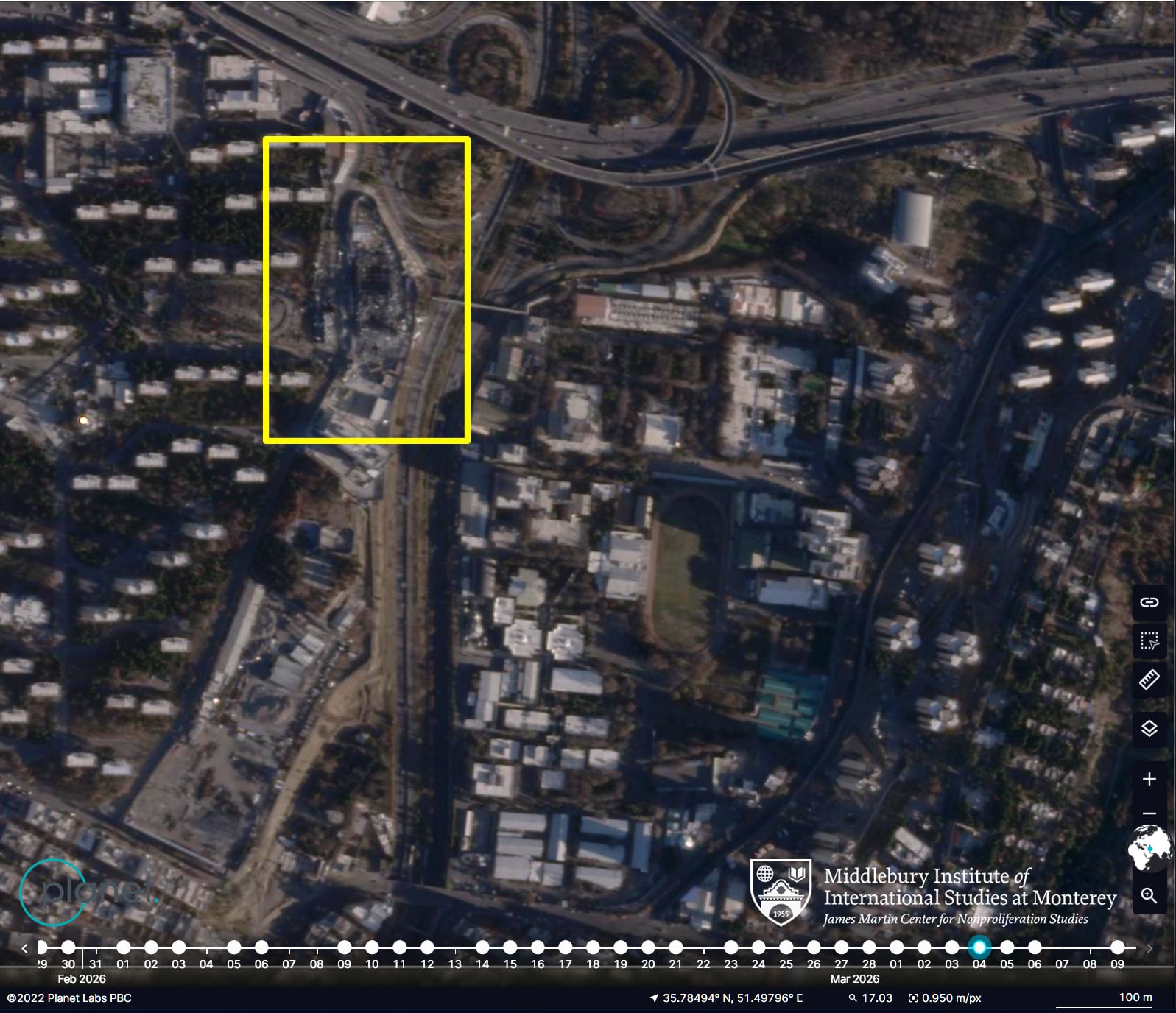
Satellite imagery and social media analysis reveal that the United States and Israel have quietly struck several Iranian facilities connected to chemical and biological weapons research, targeting sites operated by Iran's Ministry of Defense, the Revolutionary Guards Corps, and dual-use institutions. However, experts like former CIA Iran analyst Jim Lamson suggest these strikes appear incidental rather than part of a deliberate, focused campaign against Iran's chemical and biological weapons (CBW) capabilities, as many sites were primarily targeted for their roles in nuclear and missile programs. The U.S. government's longstanding assessment has been cautious, stopping short of accusing Iran of maintaining a full offensive CBW arsenal, instead characterizing Iran as possessing the capability to produce chemical weapons agents while remaining technically bound by international weapons conventions. Analysts believe Iran's CBW activities represent a "threshold capability" — maintaining dual-use research infrastructure that could enable relatively quick weapons production if the decision were made, rather than an active, large-scale offensive program. The lack of emphasis on CBW threats as a stated justification for the strikes has raised questions among experts, given that both Washington and Tel Aviv have historically cited concerns about Iran's chemical and biological research activities.
Key Takeaways
- 1. Israeli and U.S. strikes have destroyed some Iranian CBW-affiliated facilities, but experts characterize the targeting as opportunistic rather than part of a dedicated anti-CBW campaign
- 2. Iran's chemical and biological weapons program appears to be a latent "threshold capability" rather than an active, fully developed offensive arsenal with stockpiles and delivery systems
- 3. The U.S. government has long avoided directly accusing Iran of stockpiling chemical weapons, instead noting Iran's capability to produce such agents and its non-compliance with the Chemical Weapons Convention
- 4. Iran's CBW research is partly driven by deep-seated fears rooted in Iraq's devastating chemical attacks against Iran during the 1980s war, creating domestic pressure to maintain defensive capabilities
- 5. The absence of CBW concerns as an explicit justification for the military strikes has puzzled analysts, contradicting years of stated Western concerns about Iran's weapons of mass destruction research