India Achieves Major Milestone as Kalpakkam's 500 MWe Prototype Fast Breeder Reactor Successfully Reaches Criticality, Announces Prime Minister Modi

Summary
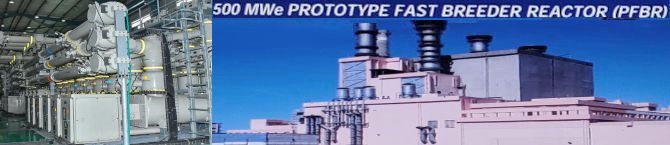
India has achieved a landmark milestone in its civil nuclear energy program with the successful attainment of criticality by the indigenously designed and constructed Prototype Fast Breeder Reactor (PFBR) located at Kalpakkam. This development marks a significant advancement in the second stage of India's three-stage nuclear power program, originally conceived by Dr. Homi Bhabha. The 500 MWe reactor represents a major technological achievement as it is capable of producing more nuclear fuel than it consumes, a characteristic known as "breeding," which gives it strategic self-sufficiency value. The reactor was developed entirely through domestic expertise and engineering, underscoring India's growing capabilities in advanced nuclear technology. Prime Minister Modi's announcement highlights the government's commitment to expanding India's clean energy portfolio while simultaneously strengthening its strategic and energy independence.
Key Takeaways
- 1. **Strategic Energy Independence:** The PFBR's ability to generate more fuel than it consumes significantly reduces India's dependence on imported uranium, enhancing long-term energy security
- 2. **Indigenous Defence-Civil Nuclear Capability:** The entirely homegrown design and construction demonstrates India's advancing self-reliance in sensitive nuclear technologies with dual-use strategic implications
- 3. **Three-Stage Nuclear Programme Progression:** Achieving Stage Two brings India closer to utilizing thorium reserves in Stage Three, of which India holds approximately 25% of global deposits
- 4. **Geopolitical Significance:** This achievement strengthens India's position as a credible advanced nuclear power, enhancing its strategic deterrence credibility and international nuclear diplomacy standing
- 5. **Technology Benchmark:** The successful criticality establishes India among a select group of nations mastering fast breeder reactor technology, alongside Russia, France, and China