Asymmetric Maritime Threats in the Red Sea and Strait of Hormuz Reveal Significant Weaknesses in Western Naval Capabilities

Summary
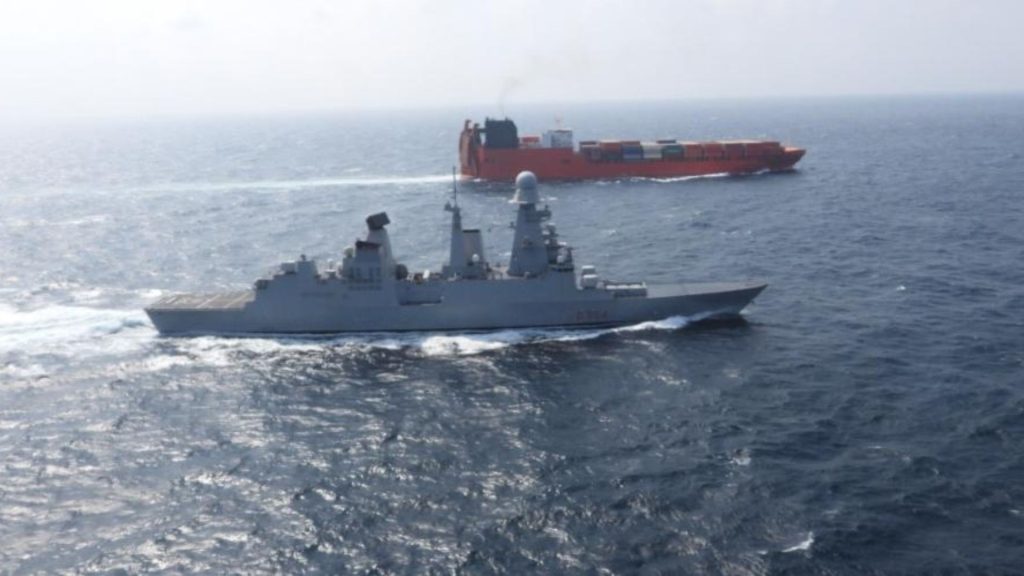
The ongoing Red Sea crisis has laid bare critical operational shortcomings within Western naval forces, particularly in countering asymmetric threats such as ballistic missiles, armed drones, uncrewed surface vessels, and waterborne explosive devices deployed by Houthi forces and Iranian-backed actors. Multinational missions — the US-led Operation Prosperity Guardian and EU-led Operation Aspides — have underscored the urgent need for permanent combat readiness, improved shared operational intelligence between allied task forces, and the development of new at-sea rearming procedures in high-threat environments. The Houthi threat has notably evolved from relatively straightforward anti-ship missile and drone attacks into sophisticated, layered multi-domain strike packages that increasingly mirror the capabilities of state-level militaries. In response to escalating US-Iran tensions, both American carrier strike groups have strategically repositioned away from Iranian missile ranges, with Iran publicly designating the USS Gerald R. Ford as a high-priority target, highlighting the growing vulnerability of major surface combatants in contested waters. Meanwhile, political divisions within the European Union have emerged over whether to expand the Aspides mission to the Strait of Hormuz, with Italy firmly opposing any extension beyond the Red Sea theater.
Key Takeaways
- 1. **Readiness Gap Exposed:** Western navies have been caught transitioning from peacetime postures to high-intensity operations with pre-existing deficiencies, reinforcing the doctrine that permanent combat readiness is now non-negotiable rather than aspirational.
- 2. **Houthi Capability Escalation:** The evolution of Houthi tactics from basic drone and missile attacks to complex, layered multi-domain strike profiles represents a significant strategic development, effectively elevating a non-state actor to near-peer threat status in the maritime domain.
- 3. **Carrier Strike Group Vulnerability:** The repositioning of the USS Gerald R. Ford and USS Abraham Lincoln to distances exceeding 1,100 km from the Iranian coastline signals a fundamental reassessment of how high-value naval assets must be deployed in contested, missile-saturated environments.
- 4. **Allied Interoperability Challenges:** Inconsistent national learning cycles and gaps in shared common operational pictures between contributing nations highlight that multinational naval coalitions still face significant command, control, and intelligence-sharing deficiencies under real combat conditions.
- 5. **EU Political Fragmentation:** Italy's opposition to extending the Aspides mission to the Strait of Hormuz reflects broader political divisions within Europe over military commitments, potentially limiting the alliance's ability to respond cohesively to an expanding regional maritime crisis.