Pakistan-Saudi Arabia Mutual Defence Treaty Undergoes First Real Combat Scenario — With Consequences Reaching Well Beyond the Iran Conflict

Summary
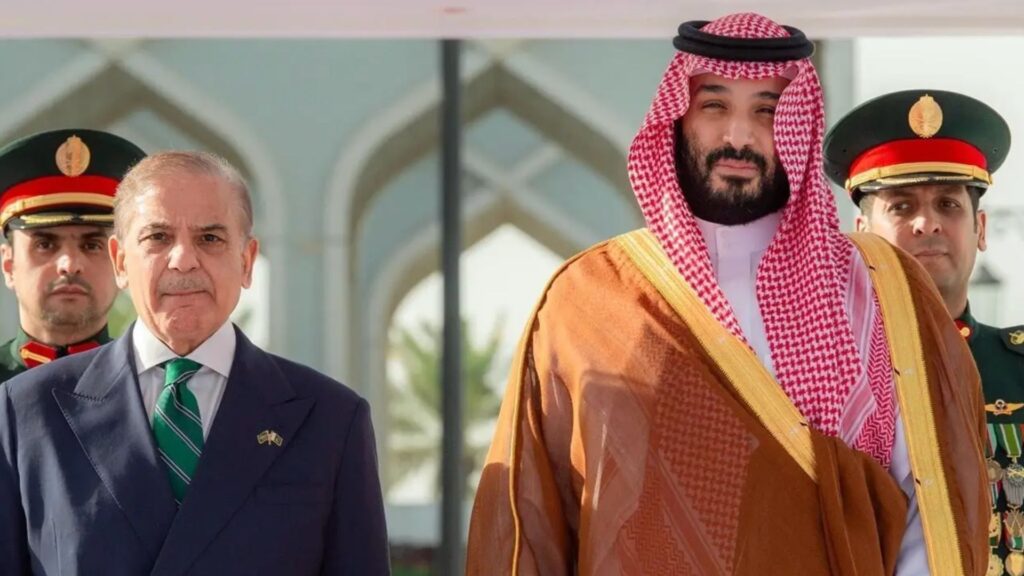
The Strategic Mutual Defence Agreement (SMDA), signed between Pakistan and Saudi Arabia in September 2025, is facing its first major test as a result of the ongoing Iran war, with the treaty's collective defence clause — modelled loosely on NATO's Article 5 — now being publicly invoked by Pakistani officials. Pakistani Foreign Minister Ishaq Dar openly warned Iranian leadership to "take care" of the Pakistan-Saudi pact, a statement analysts assessed as prematurely spending the treaty's strategic ambiguity and significantly raising the political cost of Pakistani inaction. The agreement was originally conceived partly as a response to Gulf states' eroding confidence in US security guarantees following Israeli airstrikes in Doha in September 2025, and was designed to signal deterrence rather than guarantee automatic military intervention. Following ballistic missile strikes targeting Prince Sultan Air Base in early March, Pakistani Army Chief Field Marshal Asim Munir conducted an emergency visit to Riyadh, where discussions focused on joint defensive measures, underscoring that the crisis is accelerating Pakistan's strategic timeline considerably. How Pakistan ultimately responds will likely define the credibility of its security commitments across the Gulf region for decades to come, with Saudi analysts already openly debating the potential extension of a Pakistani nuclear umbrella over the Kingdom.
Key Takeaways
- 1. The SMDA's collective defence clause, while deliberately ambiguous and not an automatic military trigger, is being stress-tested in real wartime conditions for the first time, revealing the gap between diplomatic signalling and operational military commitment
- 2. Pakistan's Foreign Minister publicly invoking the pact against Iran has strategically cornered Islamabad, dramatically limiting its room for neutrality and raising the political stakes of any non-response to an unprecedented level
- 3. Field Marshal Munir's emergency visit to Riyadh following missile strikes on Prince Sultan Air Base signals that Pakistan is actively engaging in defence consultations, potentially moving beyond symbolic solidarity toward concrete military coordination
- 4. The original motivation behind the SMDA — declining Gulf confidence in US security guarantees — means Pakistan's response will be closely watched as a bellwether for whether regional defence partnerships can substitute for American deterrence commitments
- 5. The prospect of a Pakistani nuclear umbrella over Saudi Arabia, now openly discussed by Saudi analysts, represents a profound strategic shift in Middle Eastern security architecture with far-reaching non-proliferation and geopolitical implications