Pakistan Intensifies Cross-Border Air Strikes Into Afghanistan Through Operation Ghazab Lil Haq

Summary
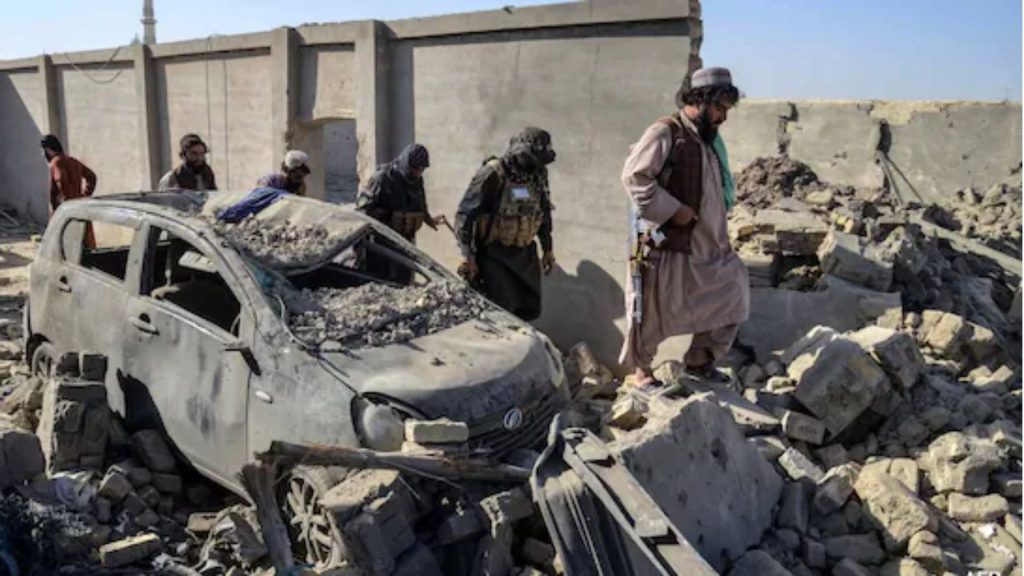
Pakistan has launched a significant escalation of military operations against the Afghan Taliban and TTP-affiliated militant groups through sustained air strikes across multiple Afghan provinces, including Kabul, Kandahar, Paktia, and Paktika, under Operation Ghazab Lil Haq ("Wrath for the Truth"). The current conflict cycle originated on 21 February when Pakistan's Air Force first struck alleged TTP and ISIS-K camps in retaliation for militant attacks on Pakistani soil attributed to groups based in Afghanistan, prompting retaliatory cross-border drone and artillery attacks from the Afghan Taliban side on 26 February. Pakistani officials have reported significant battlefield results, claiming 684 Taliban and militant fighters killed, 912 wounded, and the destruction of 252 posts, 229 armoured vehicles, and 73 targeted sites, though these figures remain unverified by independent sources. The civilian cost of the campaign has drawn serious international concern, with UNAMA documenting 185 civilian casualties between 26 February and 5 March alone, with women and children constituting 55% of those affected. Pakistan's Defence Minister has characterised the situation as an "open war," signalling a potentially prolonged and deeply destabilising military confrontation along the Afghan-Pakistani border.
Key Takeaways
- 1. **Significant Escalation of Pakistani Military Posture:** Pakistan has demonstrated a willingness to conduct deep, sustained air strikes across multiple Afghan provinces, marking a notable shift from periodic retaliatory strikes to a structured, named military operation
- 2. **Multi-Domain Conflict Emerging:** The exchange of cross-border drone attacks, artillery fire, and air strikes between Pakistani and Afghan Taliban forces indicates a multi-domain conflict dynamic developing along the Durand Line, raising risks of further escalation
- 3. **Credibility and Verification Challenges:** Both Pakistani and Afghan Taliban casualty and damage claims lack independent verification, highlighting the information warfare dimension of the conflict and the difficulty of accurate battlefield assessment
- 4. **Severe Civilian Humanitarian Impact:** UNAMA's documentation of 185 civilian casualties within just eight days, with a majority being women and children, raises serious questions about the proportionality of strikes and potential violations of international humanitarian law
- 5. **Regional Strategic Instability:** Senior Pakistani officials describing the conflict as "open war" signals a dangerous deterioration in Afghanistan-Pakistan relations with broader implications for regional stability, counter-terrorism cooperation, and the security architecture of South and Central Asia