Why the Nassau Raid Matters: Lessons from America's First Amphibious Military Operation

Summary
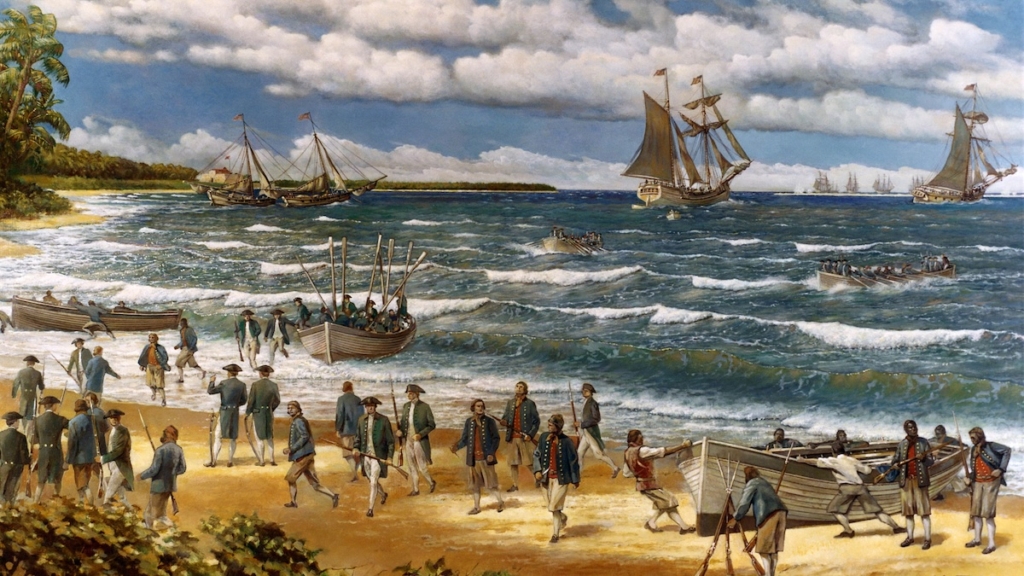
The Raid of Nassau in March 1776 marked the first time American Marines and sailors conducted an amphibious landing, establishing what would become a defining tradition of the U.S. Marine Corps. The operation emerged from the Continental Navy's earliest days, when the fledgling American military faced two critical challenges: the operational superiority of the Royal Navy and a severe shortage of gunpowder and military supplies needed to sustain the revolutionary war effort. Commander-in-chief Esek Hopkins, appointed to lead the first Continental Navy squadron of eight converted merchant vessels, deviated from his original congressional orders to clear British forces from the Chesapeake and Carolinas, instead opting to target the reportedly lightly defended Bahamas as a source of badly needed gunpowder. While the Nassau operation achieved tactical success, it was ultimately undermined by inexperience and poor decision-making, limiting its strategic impact on the broader independence movement. Despite its shortcomings, the raid provides enduring lessons for modern naval forces regarding long-distance command and control, adaptability in expeditionary operations, and the relationship between military actions and political consequences.
Key Takeaways
- 1. The Raid of Nassau on March 3, 1776, represents the first recorded amphibious landing in U.S. Marine Corps history
- 2. The early Continental Navy was built largely due to the economic influence of New England delegates in the Second Continental Congress, despite significant opposition
- 3. A critical gunpowder shortage drove much of America's early naval strategy, making the Bahamas an attractive alternative target for Hopkins' squadron
- 4. Commander Hopkins unilaterally deviated from his congressional orders, citing an escape clause permitting independent judgment under unexpected circumstances
- 5. The raid offers timeless military lessons about command-and-control challenges over long distances, operational adaptability, and the interconnection between military and political outcomes