How Patent Law Could Undermine the Pentagon's Push for Dual-Use Technology Innovation

Summary
A landmark federal court ruling in Delaware, stemming from a patent dispute between Arbutus Biopharma and Moderna over COVID-19 vaccine mRNA technology, has raised serious concerns about the scope of a century-old legal protection for government contractors known as Section 1498 immunity. The court ruled that this immunity only applies when a product directly benefits the government itself, not the general public, even if the government funded, contracted, and authorized the product's development. This narrow interpretation resulted in a historic $2.25 billion settlement between Moderna and Arbutus, with $1.3 billion contingent on how the Federal Circuit appeals court ultimately resolves the immunity question. The ruling carries significant implications for a new generation of defense technology companies called "neoprimes" — firms like Anduril, Palantir, and Shield AI — whose business model relies on developing dual-use technologies that serve both military and commercial customers simultaneously. If the Delaware court's interpretation is upheld on appeal, these companies could face substantially greater exposure to patent litigation, potentially discouraging the kind of private-sector innovation the Pentagon increasingly depends upon.
Key Takeaways
- 1. Section 1498, enacted in 1910 and expanded in 1918, was designed to shield government contractors from patent litigation, but a recent Delaware court ruling has significantly narrowed its protective scope
- 2. The court established a new distinction: government funding and authorization of a product is insufficient for immunity if the end beneficiaries are ordinary citizens rather than government personnel directly
- 3. The Moderna-Arbutus settlement, the second-largest patent settlement in history at $2.25 billion, illustrates the enormous financial stakes tied to how courts interpret contractor patent immunity
- 4. "Neoprime" defense companies building dual-use platforms for both military and commercial markets are uniquely vulnerable under this new interpretation, as their products inherently serve both government and public end-users
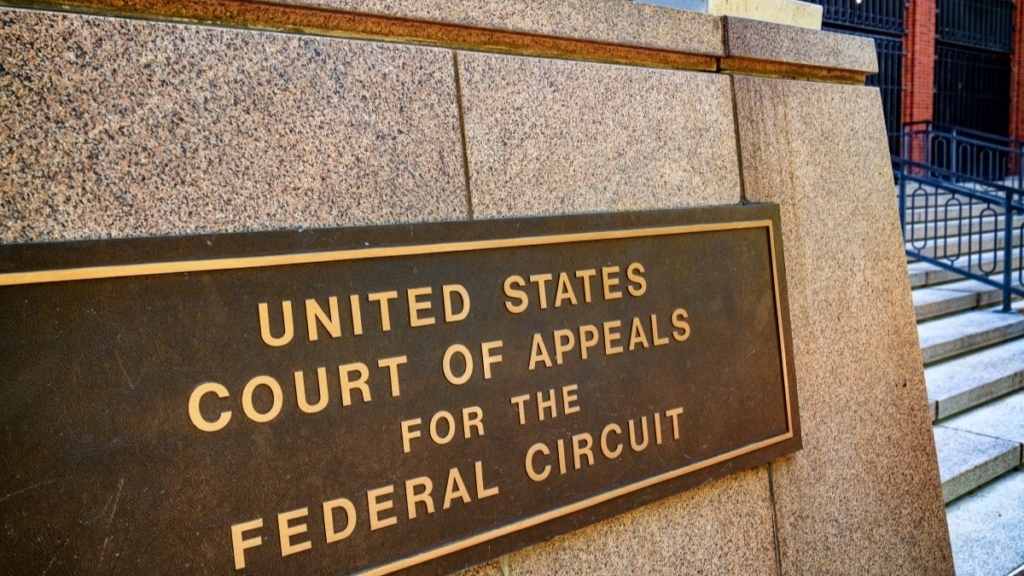
- 5. The Federal Circuit Court of Appeals' forthcoming ruling on the immunity question could reshape defense procurement strategy and either encourage or significantly deter private venture-backed innovation supporting national security