ISRO Chief V Narayanan Acknowledges Russia's Pivotal Role in Shaping India's Space Capabilities

Summary
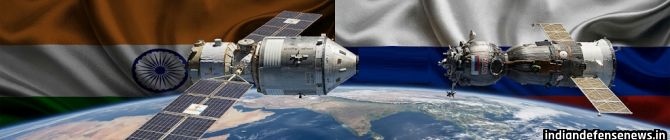
ISRO Chairman V Narayanan publicly recognized Russia's foundational contributions to India's space program during a statue unveiling ceremony for Yuri Gagarin at the Periyar Science and Technology Centre in Chennai on November 5th. He emphasized that the Soviet Union and Russia consistently supported India during critical developmental phases when other nations refused to share advanced space technologies, including facilitating the launch of India's first satellite, Aryabhata, in 1975, and enabling astronaut Rakesh Sharma's historic spaceflight aboard Soyuz T-11 in 1984. Narayanan also revealed that Russia had been willing to transfer cryogenic engine technology to India, which many countries denied due to Missile Technology Control Regime (MTCR) restrictions, though geopolitical circumstances ultimately prevented the transfer from materializing. Despite this setback, India successfully developed indigenous cryogenic technology, which became a cornerstone of its independent launch vehicle capabilities, enabling landmark achievements such as Chandrayaan-3, the Mars Orbiter Mission, and the record-breaking PSLV-C37 mission. Russia continues to play a supportive role in India's current Gaganyaan human spaceflight program, particularly in astronaut training and related cooperative activities.
Key Takeaways
- 1. **Strategic Partnership Legacy:** Russia's willingness to support India's space program when Western nations withheld technology highlights the enduring strategic importance of the India-Russia defence and technology partnership
- 2. **MTCR Geopolitical Impact:** The failed cryogenic technology transfer demonstrates how international arms control regimes like the MTCR can significantly influence a nation's technological development trajectory and strategic autonomy
- 3. **Indigenous Capability Development:** India's successful development of domestic cryogenic engine technology after being denied foreign assistance underscores its growing self-reliance in critical dual-use technologies with both space and missile applications
- 4. **Gaganyaan Cooperation:** Russia's continued involvement in India's human spaceflight program indicates an active, evolving defence-space partnership that strengthens bilateral strategic ties amid complex global geopolitical dynamics
- 5. **Dual-Use Technology Significance:** Cryogenic engine technology, being critical for both satellite launches and potential ballistic missile development, remains a highly sensitive strategic asset, making India's indigenous mastery of it a significant national security achievement