The Science Behind France's FDI Frigate's Unconventional Bow Shape and Its Nautical Advantages
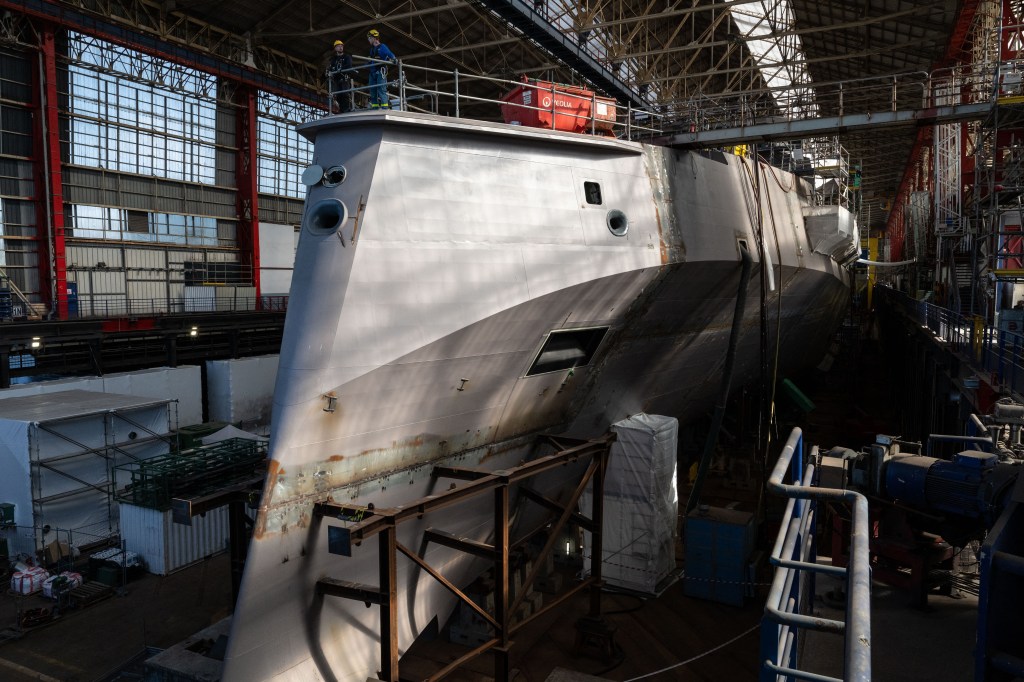

Summary
France's Defense and Intervention Frigate (FDI), known as the Amiral Ronarc'h, features a distinctive inverted bow design that significantly enhances its seakeeping capabilities by allowing the vessel to cut through waves rather than slam into them, dramatically reducing onboard vibrations and structural fatigue. Former French Navy captain Nicolas Guiraud, who commanded the lead ship for four years before joining Naval Group as a marketing director, explained that the reduced vibration translates into slower aging of the ship's structure, better preservation of electronic systems, and improved crew comfort and decision-making. Despite initial skepticism from competitors and industry observers, the FDI has demonstrated impressive performance in real-world conditions, maintaining speeds of 20 knots in sea state 6 with waves of up to 6 meters, while continuing to conduct military operations including helicopter deployment and towed sonar array usage in rough seas. The 4,500-metric-ton frigate punches above its weight class, delivering the same military capabilities typically found in a 6,000-ton vessel, with a range exceeding its advertised 5,000 nautical miles by approximately 10%, thanks to its energy-efficient combined diesel propulsion system. The FDI's success has attracted international interest, with Sweden announcing plans to purchase four frigates, and Naval Group has extended the inverted bow concept to an 8,000-ton drone-carrier frigate concept unveiled at the Euronaval exhibition.
Key Takeaways
- 1. The FDI's inverted bow eliminates wave-slamming impacts, reducing vibrations that would otherwise cause structural cracks, connector failures, and accelerated hull aging
- 2. Real-world deployments from the Arctic Circle to the Equator have validated the design, with the ship maintaining 20-knot speeds in very rough sea state 6 conditions
- 3. The FDI delivers the combat capabilities of a 6,000-ton frigate in a 4,500-ton hull, with a radar-reduced profile compared to traditional flared bow designs
- 4. Sweden's decision to purchase four FDI frigates signals growing international confidence in the unconventional design, which had initially faced widespread skepticism
- 5. Naval Group spent over a decade conducting tow-tank trials, hydrodynamic modeling, and radar evaluations before finalizing the inverted bow design, reflecting a rigorous development process