China Presents Tokyo War Crimes Trial Heritage at United Nations with 80th Anniversary Commemorative Display

Summary
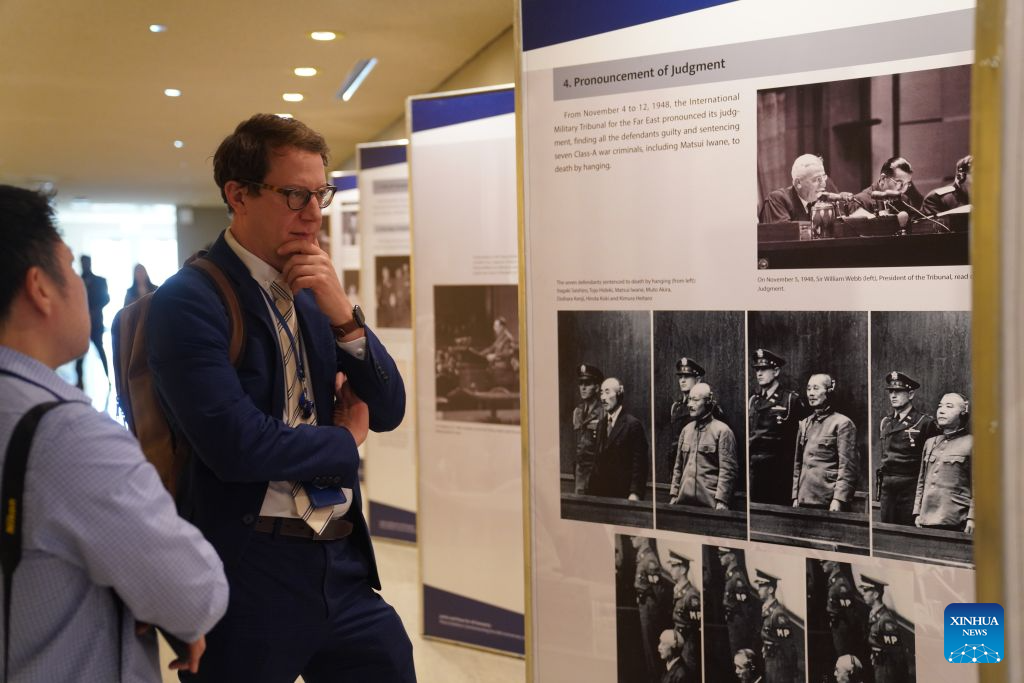
China's Permanent Mission to the United Nations organized an exhibition at UN Headquarters in New York titled "Justice and Peace for All Humanity," commemorating the 80th anniversary of the Tokyo Trial, which prosecuted Japanese war crimes committed during World War II. The exhibition, held during UN International Law Week, featured historical photographs, archival documents, and publications documenting Japan's wartime aggression and the subsequent international legal proceedings. China's UN Ambassador Fu Cong used the occasion to strongly criticize Japan's current right-wing political trajectory, highlighting concerns about Japan questioning the Tokyo Trial's legitimacy, venerating convicted war criminals, weakening its pacifist constitution, easing arms export restrictions, and expanding its collective self-defense capabilities. The event drew participation from representatives of Russia, North Korea, Spain, Nicaragua, and other nations, with speakers collectively emphasizing the importance of upholding the post-war international order and preventing the resurgence of militarism. Ambassador Fu warned that rising neo-militarism poses a contemporary threat to international peace and security, calling on nations to collectively defend the post-war world order established through trials like Tokyo.
Key Takeaways
- 1. **Strategic Messaging Against Japan:** China is leveraging the Tokyo Trial anniversary as a diplomatic platform to publicly challenge Japan's evolving defense posture and frame it as dangerous neo-militarism
- 2. **Coalition Building:** By involving Russia, North Korea, and other nations, China is strategically assembling geopolitical alignment against Japan's remilitarization within a multilateral UN framework
- 3. **Defense Policy Criticism:** China explicitly condemned Japan's loosening of arms export controls, expanded collective self-defense rights, and constitutional reinterpretation as direct violations of post-WWII peace commitments
- 4. **Information Warfare Dimension:** Hosting the exhibition at UN Headquarters represents a calculated soft-power and narrative-control strategy, projecting China as the guardian of post-war international legal order
- 5. **Regional Security Implications:** China's warnings about "neo-militarism" signal continued tensions over Japan's accelerating military modernization, with broader implications for Indo-Pacific regional stability and the US-Japan security alliance