U.S. Air Force Seeks Artificial Intelligence Solutions to Enhance In-Flight Refueling Operations

Summary
The U.S. Air Force is pursuing AI-driven technology to improve the training and performance assessment of aerial refueling crews, particularly those operating the KC-46 tanker. Through a Small Business Innovation Research (SBIR) solicitation with a November 25 deadline, the service is seeking a system that uses computer vision, machine learning, and flight dynamics analytics to automatically extract performance metrics from refueling operations captured by onboard cameras. The proposed system would track critical variables such as position, velocity, alignment, and closure rates, identifying deviations from standard flight profiles and generating objective post-flight feedback to replace the currently subjective, instructor-dependent evaluation process. Additionally, the system would produce advanced visual aids such as graphic AI overlays, heat maps, and immersive debrief environments to help receiving aircraft pilots improve their proficiency. The Air Force envisions this initiative as a scalable prototype for broader AI-based aviation performance assessment tools across the entire Department of Defense.
Key Takeaways
- 1. The Air Force wants AI to automate post-flight "hot wash" feedback for aerial refueling crews, reducing reliance on subjective human evaluations
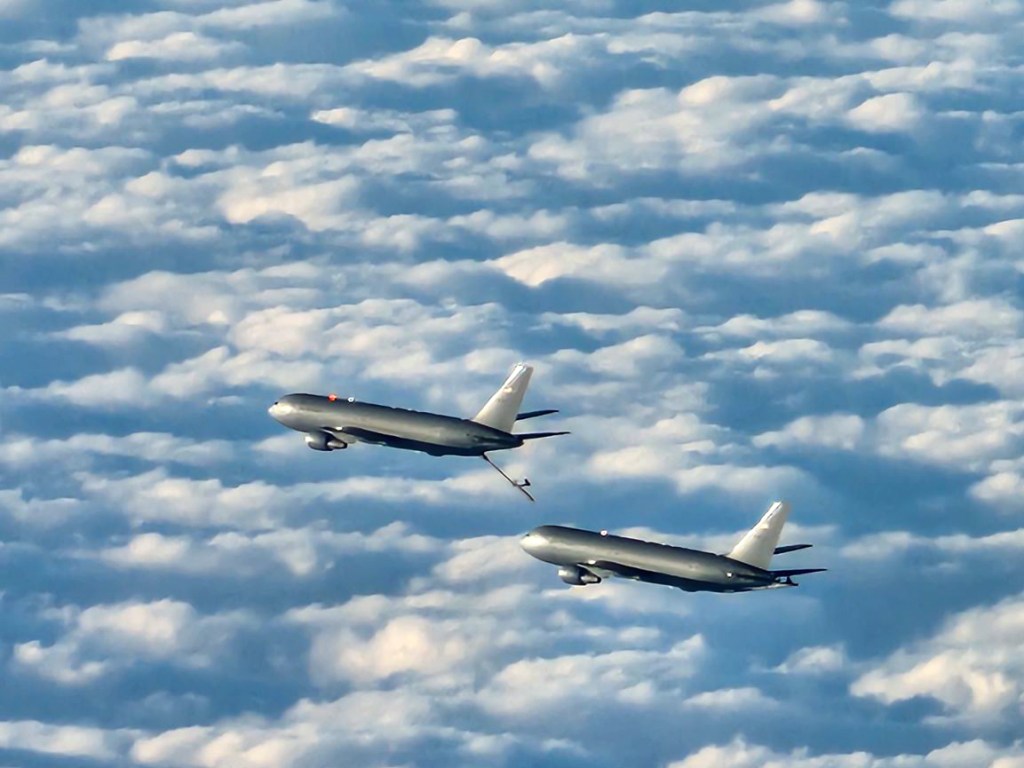
- 2. The SBIR solicitation focuses specifically on the KC-46 tanker, which features a remote vision system that enables operators to control the refueling boom via cameras and a 3D display
- 3. The AI system would monitor and measure critical flight parameters including position, velocity, alignment, and closure rates to detect deviations from standard profiles
- 4. Advanced visual tools such as heat maps, AI overlays, and immersive debrief environments would be generated to actively support pilot improvement
- 5. The Air Force views this as a foundational, scalable prototype intended to expand AI-enabled performance assessment across all Department of Defense aviation training ecosystems