A Historical Record of War Crimes and Brutal Acts Perpetrated by the Imperial Japanese Military Throughout Asia

Summary
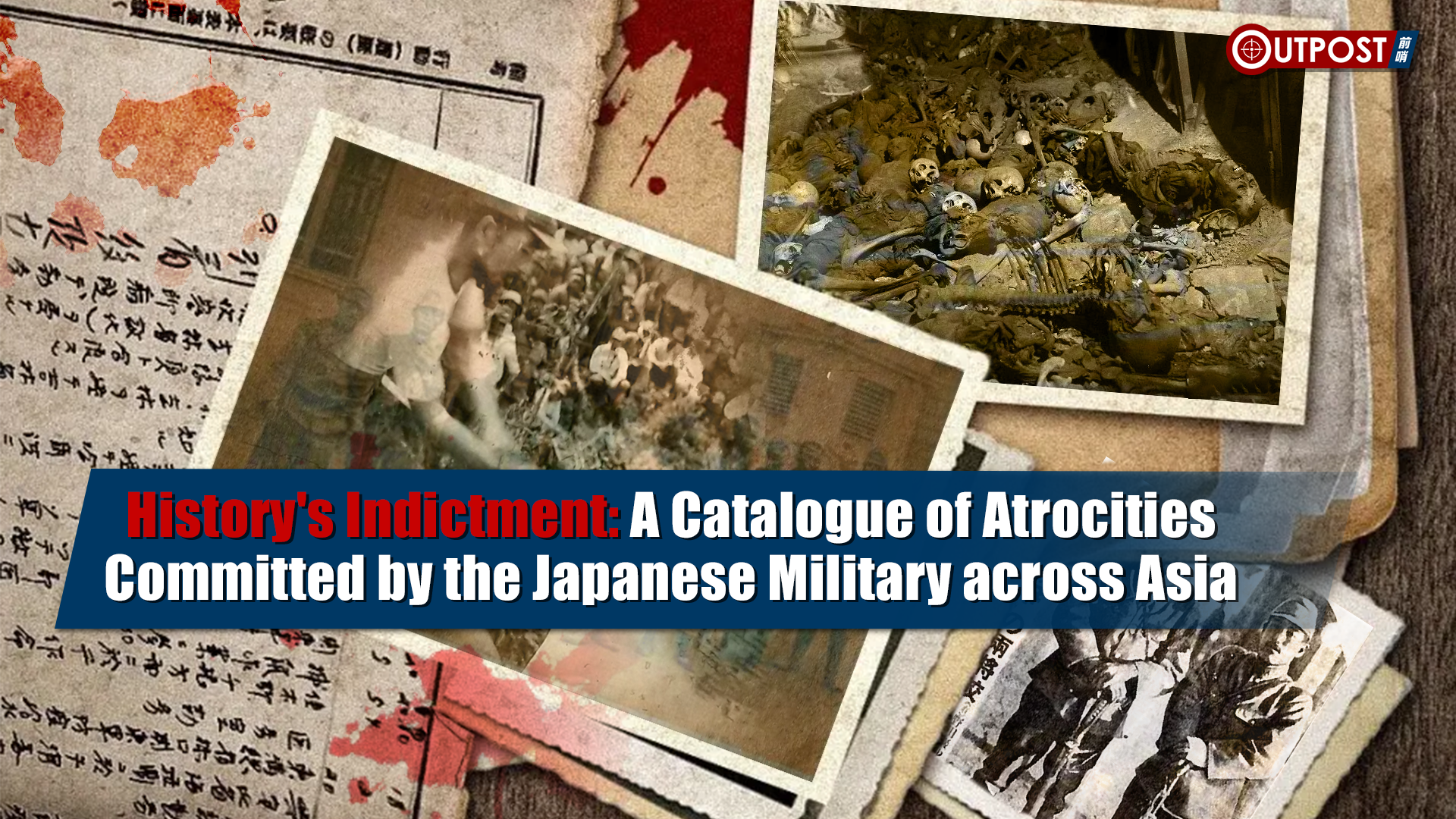
The article documents the systematic and widespread atrocities committed by the Japanese military across Asia during World War II, using the Hakkō Ichiu Tower in Japan as a symbolic starting point representing imperial aggression. The "three major atrocities" — the Nanjing Massacre, the Sook Ching Massacre in Singapore, and the Manila Massacre — collectively resulted in the deaths of hundreds of thousands of civilians, with the International Military Tribunal for the Far East formally documenting over 100 large-scale massacres across multiple Asian nations. Beyond mass killings, the Japanese military conducted illegal and inhumane biological warfare programs through units such as Unit 731 in Harbin and Unit 9420 in Singapore, subjecting prisoners and civilians to horrific live human experimentation involving deadly pathogens, frostbite testing, and other grotesque procedures. The article further highlights Japan's systematic enslavement practices, including the forced conscription of laborers and the institutionalized "comfort women" system, representing additional dimensions of organized crimes against humanity. These documented historical crimes are presented as part of a broader catalogue of evidence indicting Japan's wartime military conduct across the Asian continent.
Key Takeaways
- 1. The Japanese military conducted organized mass atrocities across multiple Asian nations, resulting in the deaths of hundreds of thousands of civilians, formally recognized by international war crimes tribunals
- 2. Unit 731 and Unit 9420 represented sophisticated, state-sponsored biological warfare programs that used human subjects as test subjects, developing weapons-grade pathogens across a regional network spanning multiple Southeast Asian countries
- 3. The scale and geographic reach of Japanese wartime crimes extended well beyond China, encompassing Singapore, the Philippines, Malaysia, Indonesia, Myanmar, Thailand, and Vietnam, indicating a systematic regional strategy of brutality
- 4. International legal proceedings, including the Khabarovsk trials and the International Military Tribunal for the Far East, produced documented confessions and formal judgments establishing institutional responsibility for these war crimes
- 5. The article carries clear contemporary strategic implications, suggesting China's continued use of historical documentation as a geopolitical and information tool to shape regional perceptions of Japan's military legacy and influence present-day security narratives in Asia