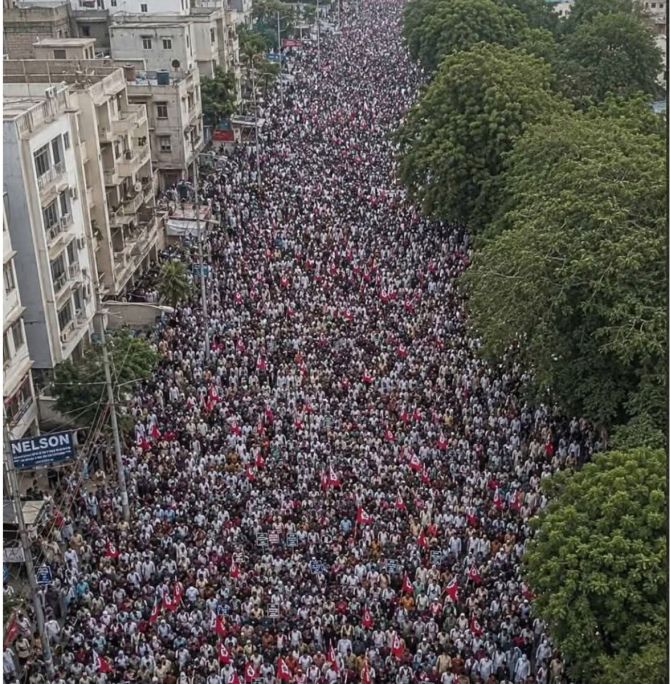
Large Karachi Gathering Demands Full Political and Ideological Freedom for an Independent Sindhudesh

Summary
Jeay Sindh Muttahida Mahaz (JSMM) chairman Shafi Burfat has called for consolidated political unity among Sindhi nationalist factions, framing Sindh as a colonially occupied territory whose resources, rivers, land, and political autonomy remain under the control of the Pakistani state and military. Burfat praised the 'Wahdat-i-Sindh' rally organized by the Sindh United Party in Karachi as a meaningful political expression of Sindh's quest for geographical integrity and public rights, urging all pro-Sindh groups to overcome internal differences. He emphasized the necessity of broad-based grassroots mobilization across villages, educational institutions, and diaspora communities, advocating for a sustained long-term political campaign rather than celebrating isolated victories as final achievements. Burfat firmly reiterated the Sindhi people's right to self-determination under international law, calling for the establishment of an independent Sindhudesh while urging the diaspora to amplify the anti-colonial struggle on the global stage. The rally is being viewed as a significant symbolic step in consolidating fragmented nationalist forces under a unified political vision amid intensifying separatist sentiment in Sindh.
Key Takeaways
- 1. **Separatist Movement Gaining Momentum:** Rising nationalist sentiment in Sindh is consolidating into a more organized political movement, posing potential internal security challenges for Pakistan's federal establishment.
- 2. **Strategic Resource Contestation:** The movement's core grievances center on control over Sindh's critical natural resources, rivers, coastal areas, and agricultural land, indicating deep-rooted tensions with Pakistan's central government and military over resource distribution.
- 3. **Call for International Advocacy:** Burfat's explicit appeal to the Sindhi diaspora to internationalize the struggle suggests an intent to apply diplomatic and reputational pressure on Pakistan at the global level, potentially drawing international scrutiny.
- 4. **Unity Among Fragmented Groups:** The deliberate push to unite disparate Sindhi nationalist factions under a common platform signals a strategic maturation of the separatist movement, making it potentially more organized and resilient against state suppression.
- 5. **Implications for Pakistan's Internal Stability:** Combined with ongoing Baloch insurgency and tensions in Khyber Pakhtunkhwa, a strengthening Sindhi separatist movement further strains Pakistan's internal cohesion, with significant strategic implications for regional security dynamics relevant to India's defence calculus.