Digantara Launches MOSAIC: An Artificially Intelligent, Decentralized Optical Surveillance System for Space Domain Awareness

Summary
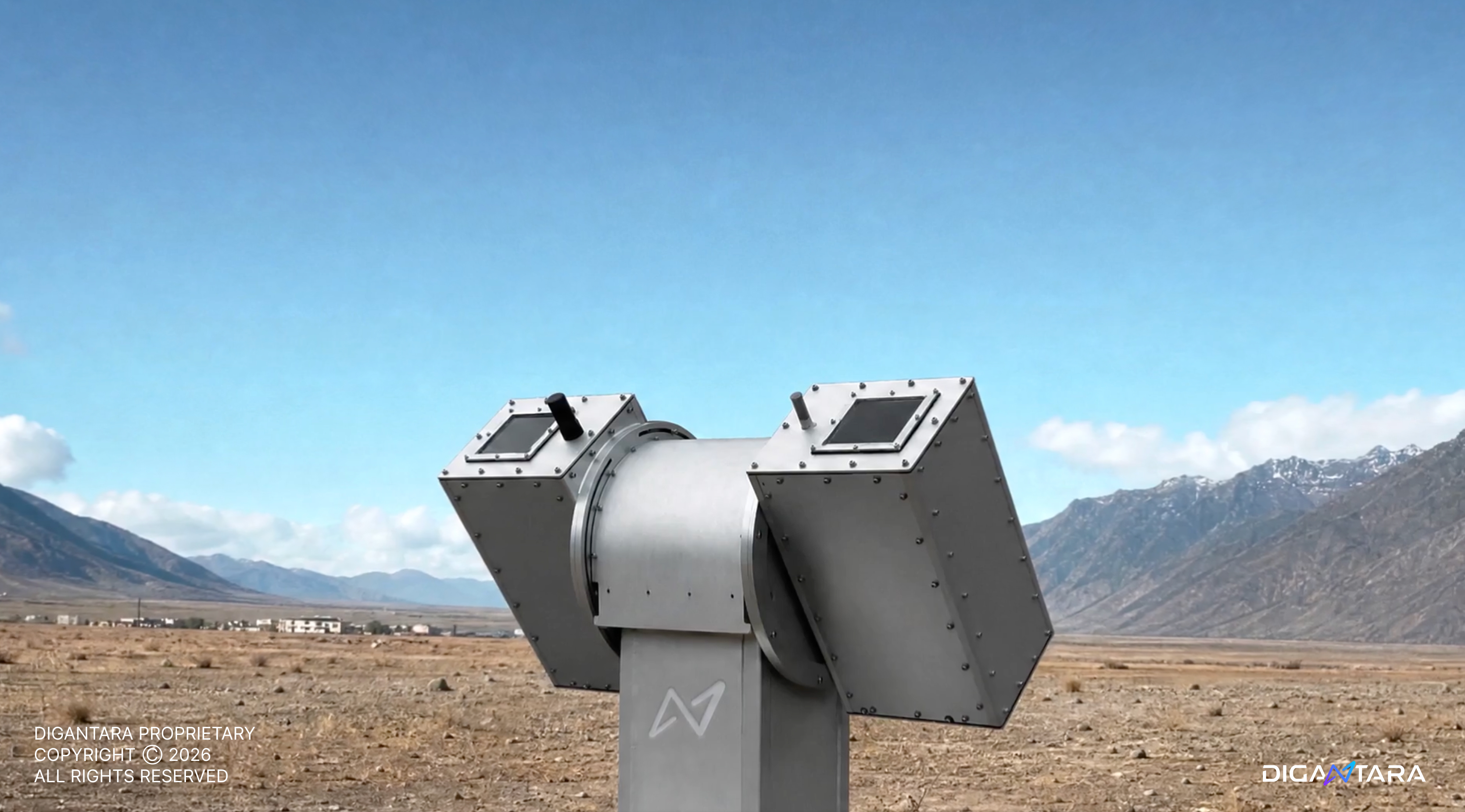
Digantara, an Indian space domain awareness and defence intelligence company, has introduced MOSAIC, an AI-driven distributed optical sensor network designed to provide India with continuous, real-time tracking of objects in Low Earth Orbit (LEO), marking a significant step toward sovereign space surveillance capability. The system's strategic relevance was highlighted during Operation Sindoor, where India's military strikes relied partly on foreign commercial satellite imagery from US-based Maxar Technologies for target validation and damage assessment, exposing India's dependency on externally owned data for critical national security decisions. MOSAIC's initial deployment consists of five networked nodes, each housing an electro-optical sensor system with onboard AI/ML processing, autonomous power systems, and environmental resilience to operate across extreme Indian terrains ranging from the Thar Desert to the Himalayas. The system's AI-based detection technology can identify Resident Space Objects (RSOs) including faint targets using a "Lost-in-Space" attitude estimation method that requires no prior positional data, and its capabilities extend to celestial navigation in GPS-denied environments. By building a domestically operated, continuously functioning orbital tracking network, MOSAIC represents India's strategic push to reduce dependence on foreign commercial providers and assert greater sovereign control over its space intelligence pipeline.
Key Takeaways
- 1. **Sovereign Space Intelligence:** MOSAIC directly addresses India's critical vulnerability of depending on foreign-owned satellite data for time-sensitive national security and military decision-making, as exposed during Operation Sindoor
- 2. **Distributed Resilience Over Single-Point Systems:** Unlike traditional fixed, centralized space surveillance infrastructure, MOSAIC's five-node distributed architecture mirrors the resilience principles of power grids and the internet, making it harder to degrade or neutralize in a conflict scenario
- 3. **AI-Driven Military Space Awareness:** The system's AI/ML-based RSO detection and Lost-in-Space attitude estimation capability enables autonomous, real-time orbital tracking without external cueing, a significant tactical advantage in contested space environments
- 4. **GPS-Denied Navigation Capability:** MOSAIC's extension into celestial navigation for GPS-denied environments has profound military implications, offering armed forces an alternative positioning solution during electronic warfare or satellite jamming scenarios
- 5. **Broader Counterspace Strategic Context:** As space becomes an increasingly contested domain across the Indo-Pacific and globally, MOSAIC positions India to independently monitor adversarial satellite movements, counterspace activities, and orbital threats, strengthening its overall defence posture