Xi Jinping Outlines Four Core Principles for Addressing the Palestinian Issue

Summary
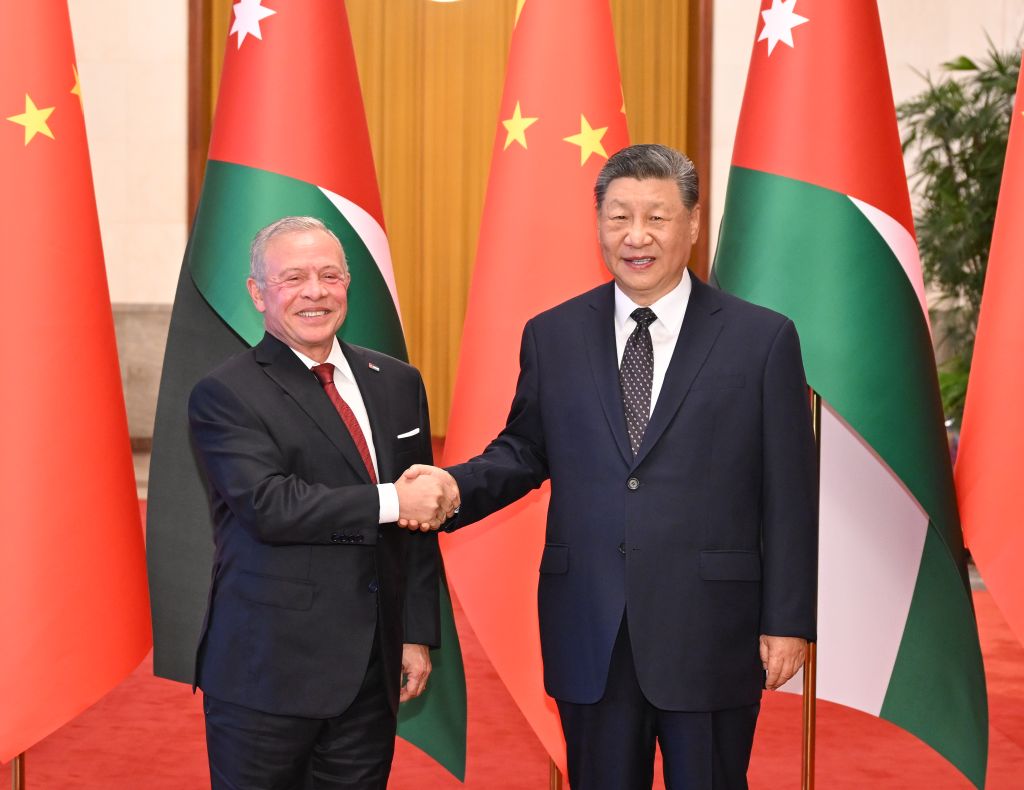
During a high-level meeting in Beijing with Jordanian King Abdullah II, Chinese President Xi Jinping articulated four foundational principles that he believes should guide the resolution of the Palestinian question, which he identified as the central issue of Middle Eastern geopolitics. Xi emphasized that a political settlement through the two-state solution remains the correct path forward, calling for the prompt resumption of Israeli-Palestinian peace negotiations and the eventual establishment of an independent Palestinian state. He further stressed the importance of Palestinian self-governance in both the West Bank administration and Gaza's post-war reconstruction efforts, rejecting external control over Palestinian affairs. Xi also called upon the international community, particularly the UN Security Council, to fulfill its obligations by protecting civilian lives, ensuring humanitarian aid access, and preventing further humanitarian catastrophes. Finally, he underscored that any lasting resolution must be rooted in international law, addressing both immediate conflicts and underlying causes to achieve comprehensive and sustainable peace.
Key Takeaways
- 1. China is positioning itself as a significant diplomatic actor in Middle Eastern affairs by publicly advocating a structured framework for Palestinian conflict resolution
- 2. Beijing's strong endorsement of the two-state solution signals a direct challenge to unilateral approaches that bypass Palestinian statehood
- 3. The principle of "Palestinians governing Palestine" reflects China's broader opposition to foreign-imposed governance structures, consistent with its non-interference foreign policy doctrine
- 4. China is applying strategic pressure on the UN Security Council, implicitly targeting Western veto power usage that has blocked humanitarian resolutions
- 5. The meeting with Jordan's King Abdullah II highlights China's deepening diplomatic engagement with Arab nations, potentially expanding its geopolitical influence in a traditionally Western-dominated region