Trapped in the Crossfire: Unresolved Manipur Ethnic Conflict Poses Serious Threats to India's National Security

Summary
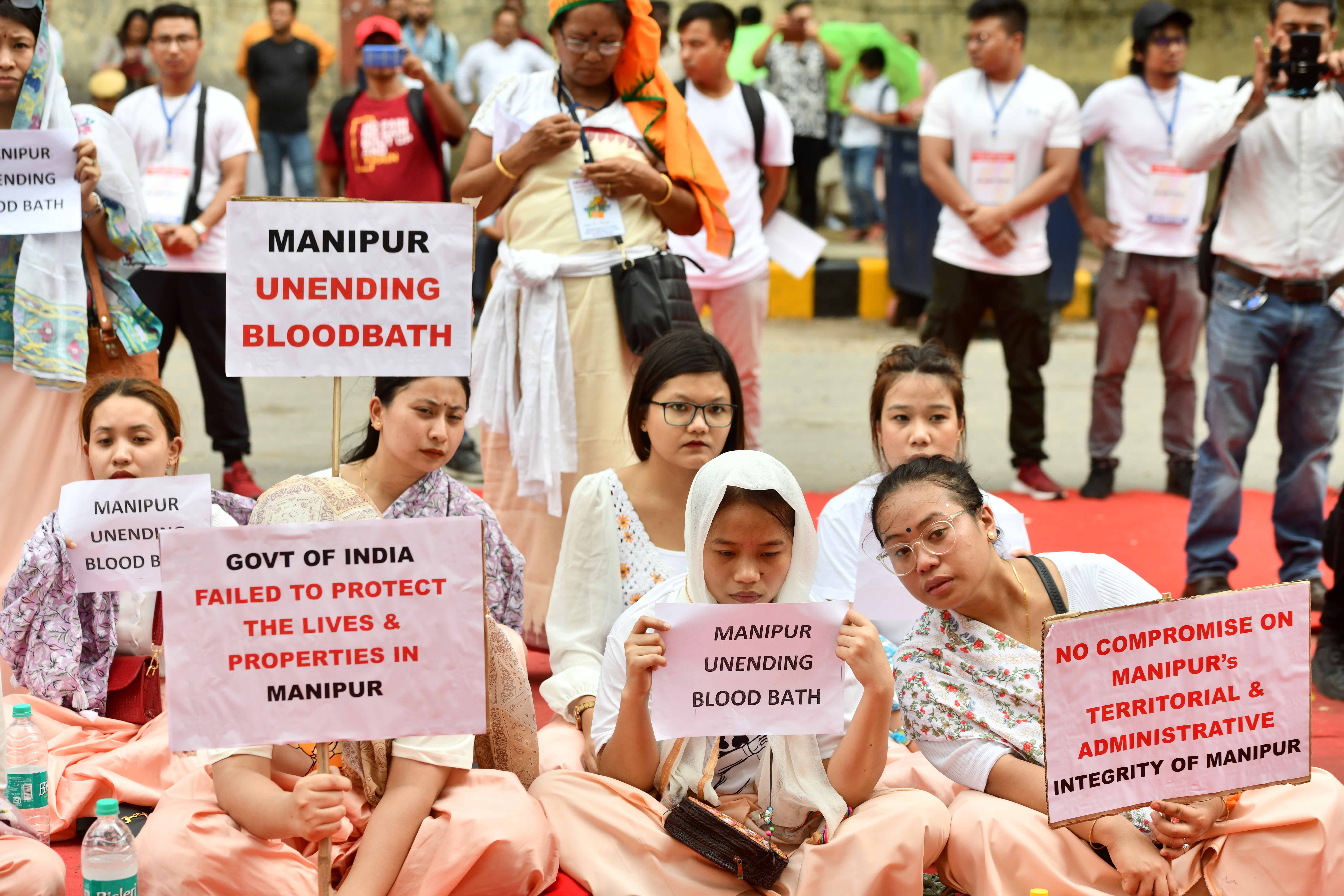
The ongoing ethnic conflict in Manipur between the Meitei and Kuki communities, which erupted violently in May 2023, represents one of the most severe civil war-like situations in post-independence India, with deep-rooted political, tribal, and colonial-era complexities driving the prolonged unrest. The conflict originated from a Manipur High Court directive regarding Scheduled Tribe status for Meiteis, triggering widespread violence that has resulted in complete community segregation and severe social polarization. The state government under Chief Minister N. Biren Singh has been criticized for adopting a partisan, ethnocratic stance by demonizing the Kuki community, which has intensified their demand for a separate Union Territory with legislative powers. The central government has attempted to manage the crisis through two primary strategies: extending the Suspension of Operations (SoO) ceasefire agreement with Kuki insurgent groups in September 2025 while maintaining Manipur's territorial integrity, and politically accommodating Kuki and Naga tribal MLAs through newly created Deputy Chief Minister positions. However, these top-down measures have been widely criticized as undemocratic and insufficient, with significant internal Kuki opposition viewing political accommodation as a deliberate weakening of their autonomy demands.
Key Takeaways
- 1. **National Security Risk:** The prolonged ethnic conflict in Manipur, bordering Myanmar and China, creates dangerous security vulnerabilities in India's strategically critical northeastern corridor, potentially exploitable by external actors
- 2. **Insurgency Management Challenges:** The central government's extension of the Suspension of Operations (SoO) agreement with Kuki insurgent groups in September 2025 reflects the persistent difficulty of disarming and demobilizing armed ethnic factions in conflict zones, complicating military and paramilitary operations
- 3. **Civil-Military Governance Failure:** The state government's openly ethnocratic positioning and failure to maintain neutral civil administration has undermined security forces' ability to restore order impartially, deepening communal divisions and prolonging operational deployments
- 4. **Political Autonomy vs. Territorial Integrity:** The unresolved tension between Kuki demands for a separate Union Territory and Meitei insistence on Manipur's territorial integrity presents a dangerous governance dilemma that could set precedents for other ethnically divided northeastern states
- 5. **Long-term Stabilization Concern:** The complete segregation of communities and decades-long social damage signals that even if active hostilities cease, significant peacekeeping, reconstruction, and conflict-resolution resources will be required for long-term regional stabilization