Rheinmetall Introduces the GMF 140 Frigate in a Bid to Enter the North American Naval Market

Summary
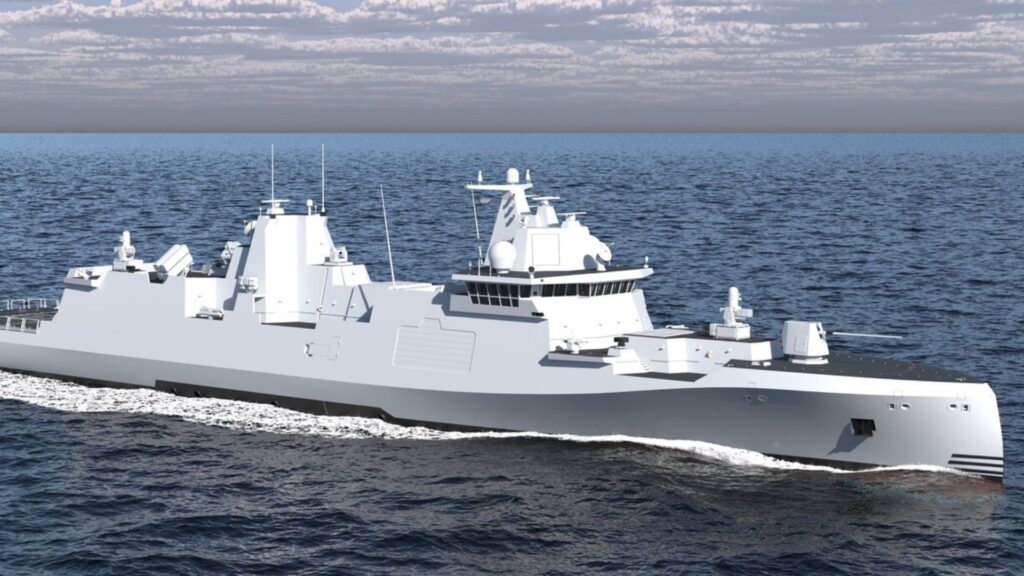
Rheinmetall officially revealed the GMF 140, a 140-metre guided missile frigate displacing approximately 6,000 tonnes, on 3 August 2026, positioning it primarily as a candidate for North American naval procurement opportunities. The vessel is equipped with a robust armament package including a 64-cell strike-length vertical launching system, a five-inch main gun, anti-ship missiles, torpedo tubes, a close-in weapon system, a laser, and both hull-mounted and towed sonar, with its combat system described as AEGIS augmented with CMS330 and a US-sourced air defence radar capable of ballistic missile defence tracking. The GMF 140 appears to be a scaled-up evolution of the previously revealed GMF-120 design, retaining the same cell count and 30-knot speed while substituting American sensors and a heavier gun to better suit North American requirements. This announcement follows a significant domestic setback for Rheinmetall and its partner NVL, after Germany cancelled the F126 frigate program in June 2026 and awarded an €6.3 billion contract to TKMS for MEKO A-200 frigates, effectively pushing Rheinmetall to seek export opportunities abroad. The most promising market appears to be the United States, where the Constellation-class frigate was cancelled in late 2025 and $1.85 billion in FY2027 research funding was allocated to study future frigates and destroyers potentially built to foreign designs, though Rheinmetall currently lacks an American shipyard partner.
Key Takeaways
- 1. **Domestic Rejection Drives Export Push:** Rheinmetall's unveiling of the GMF 140 is a direct strategic response to losing the German F126 frigate competition to TKMS, signaling the company's pivot toward North American naval markets to sustain its shipbuilding ambitions.
- 2. **Americanized Design for Market Fit:** The GMF 140 deliberately incorporates US-compatible systems, including AEGIS combat management, American sensors, and ballistic missile defence capability, suggesting a calculated effort to align with US and Canadian procurement preferences and interoperability requirements.
- 3. **US Market Offers the Strongest Opportunity:** The cancellation of the US Navy's Constellation-class frigate and the allocation of $1.85 billion in research funding for foreign-designed warships creates a viable opening, though Rheinmetall faces stiff competition from established Korean and Japanese shipbuilders with existing US industrial relationships.
- 4. **Canadian Market Alignment Remains Unclear:** No current Canadian naval requirement precisely matches a 6,000-tonne air defence frigate, as Canada's active programs focus on River-class destroyers and a lighter corvette project, meaning Rheinmetall may need to tailor its pitch or await future requirements.
- 5. **TKMS Dominates as Rheinmetall's Key Rival:** TKMS has secured both the German frigate contract and preferred supplier status for Canada's submarine project, establishing itself as Rheinmetall's primary competitor in the same North American and European naval markets Rheinmetall is now aggressively targeting.